Dear Dementia Simulation Program, A Letter

Dear Dementia Simulation Program aka โ€œDemSimโ€,

I would like to be your friend. I really would. But I have worries. You may not know me very well, so you wouldnโ€™t know that I have a lot of worries, being a worrisome person.

I know you donโ€™t intend to be a cause for my worry, but you are.

This is a hard letter for me to write. I am not sure it will be received well. You might not even want to be my friend after reading it. But I need to write it.

You see, I am worried about how you are explaining the experience of dementia to people.

Maybe it is none of my business. But it also is. I have been advocating for the rights and support of people living with dementia for 30 years. This has meant that I have had the incredible privilege of learning from people living with dementia, and their families and friends, by hearing their stories and experiences, and by witnessing their hope and resilience, as well as their grief.

Through this I have also witnessed the paradigm of dementia that we have, that is in the air we all breathe.

This paradigm stigmatizes people living with dementia. It focuses primarily on the deficits of people living with dementia. It puts people living with dementia into boxes, i.e. stages, that discourages us from seeing people as individuals. This dementia paradigm abnormalizes people living with dementia, and tells us that everything a person living with dementia does, thinks, or even feels is pathology. It dismisses the idea that people living with dementia, like all of us, have things we do well, and things we donโ€™t do well.

The stigma of dementia tells a story about dementia that results in us seeing people living with dementia in a certain way โ€“ as incapable, different, problematic, โ€œotherโ€. This has the potential for us to dehumanize persons living with dementia.

Being with people living with dementia – seeing them, hearing them, learning from them – has showed me how untrue this paradigm is.

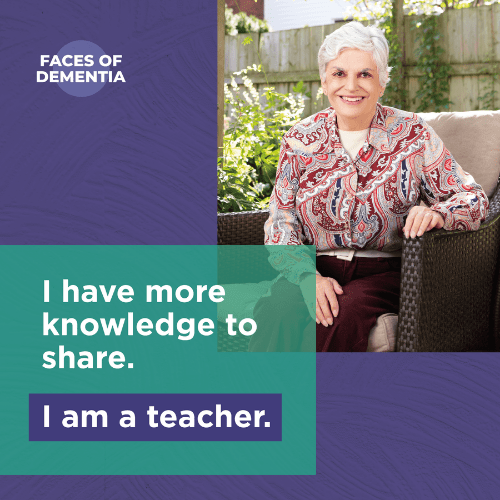
People living with dementia are everything. They are full human beings. They are capable, smart, tenacious. They are all the things that every human being is. They just happen to live with brain changes.

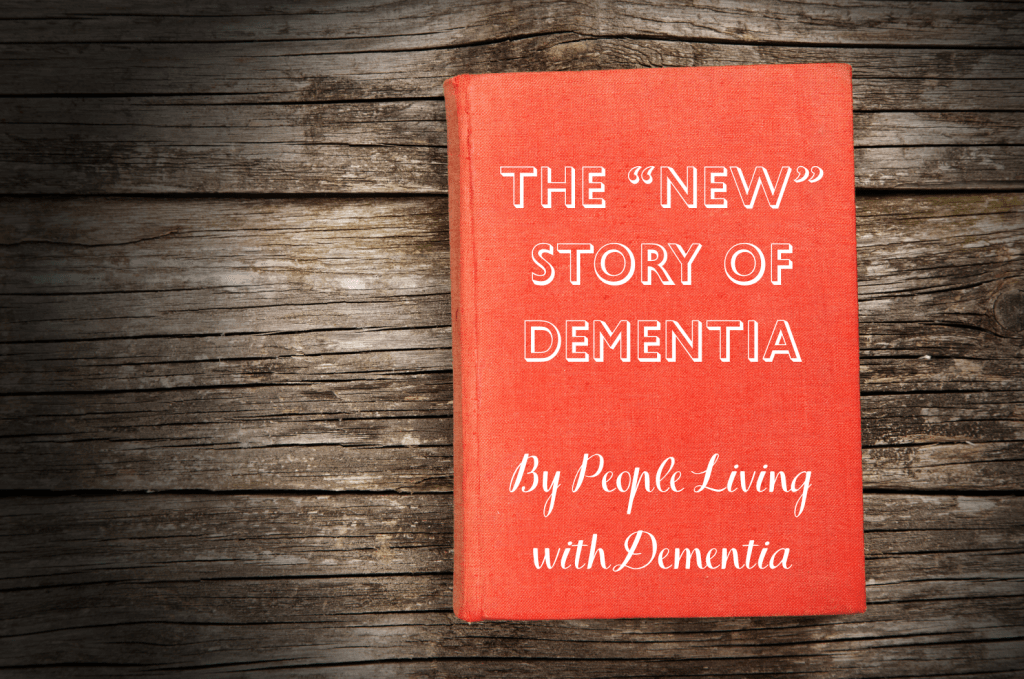
So, I worry that you, DemSim, are not telling this story.

I worry about the story you are telling.

DemSim, when people spend time with you, you give them things to do that they canโ€™t do. In fact, you deliberately make it hard for them to do these things. You make them wear gloves so they canโ€™t pick up things. You make them wear glasses so they canโ€™t see well.  You make it dark. You make it loud. You give them tasks to do, like putting clothes away, or finding things, or sorting things, and they are not allowed to talk to you or ask questions.

This is all you want to do, by the way, so this is sort of a bummer.

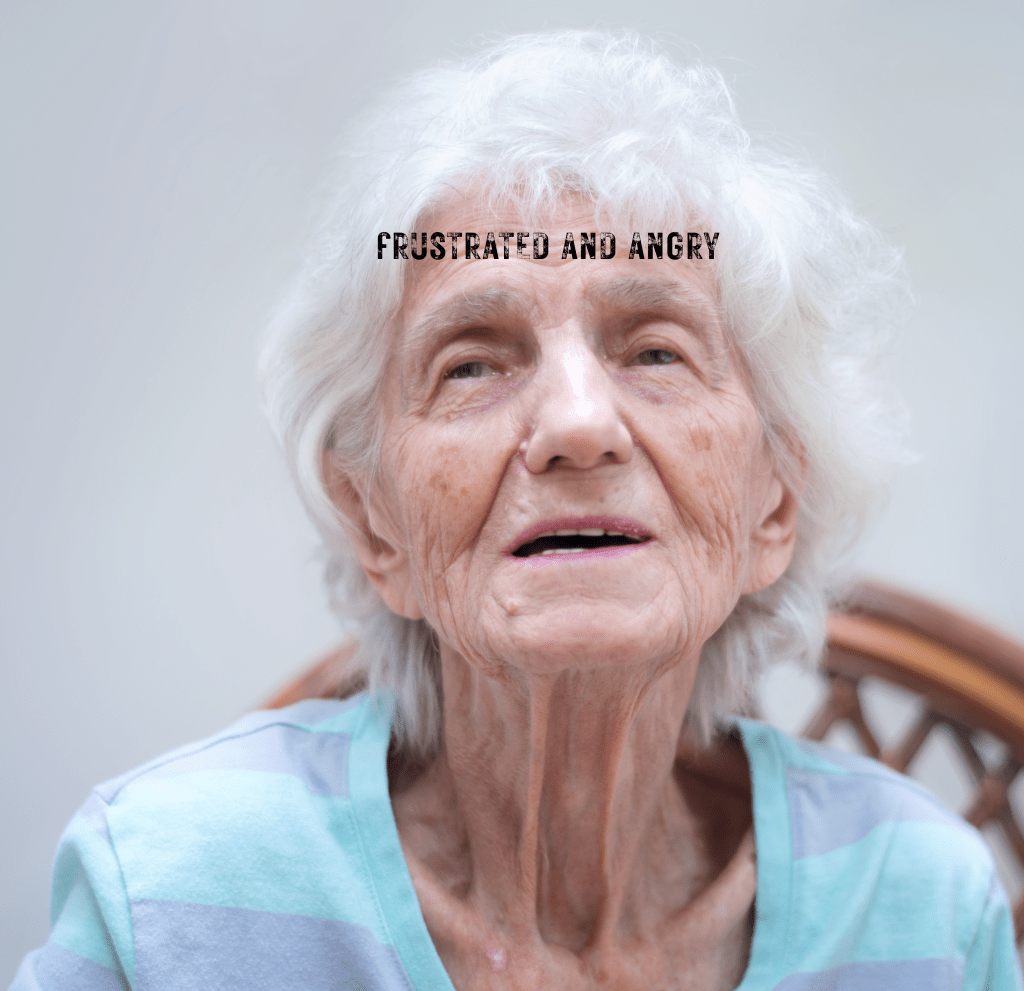
So these people naturally get frustrated and angry and scared and anxious.

And then you say that this is because of their dementia!

But it seems to be more about these limitations you are putting on people.

Okay, so letโ€™s say this is dementia.

But you seem to only focus on what a person with dementia CANโ€™T do. What about what they CAN do?

I worry that after people spend time with you, they might not be looking for what persons living with dementia CAN do. They might not try to support a person with dementia to do what they can, or in a different way, because they might think โ€œdementia just makes people not be able to do thingsโ€.

I donโ€™t think that is what you want people to think about you?

I also worry that people who spend time with you might think that the main reason why a person with dementia is not doing something is because they CANโ€™T, when sometimes the reason is that they donโ€™t want to. Maybe they donโ€™t want to fold clothes, or sort buttons.

I worry that one of your messages is that we should โ€œdoโ€ more to people living with dementia, rather than with people living with dementia. I hear a message that, because people living with dementia have difficulty doing things, we need to do more for them, or give them more instructions to do things. And this could be true for some situations. But what about asking a person living with dementia what they want to do? Is this task important to them? If it is something they need to do, how do we partner with people living with dementia rather than do for and to them?

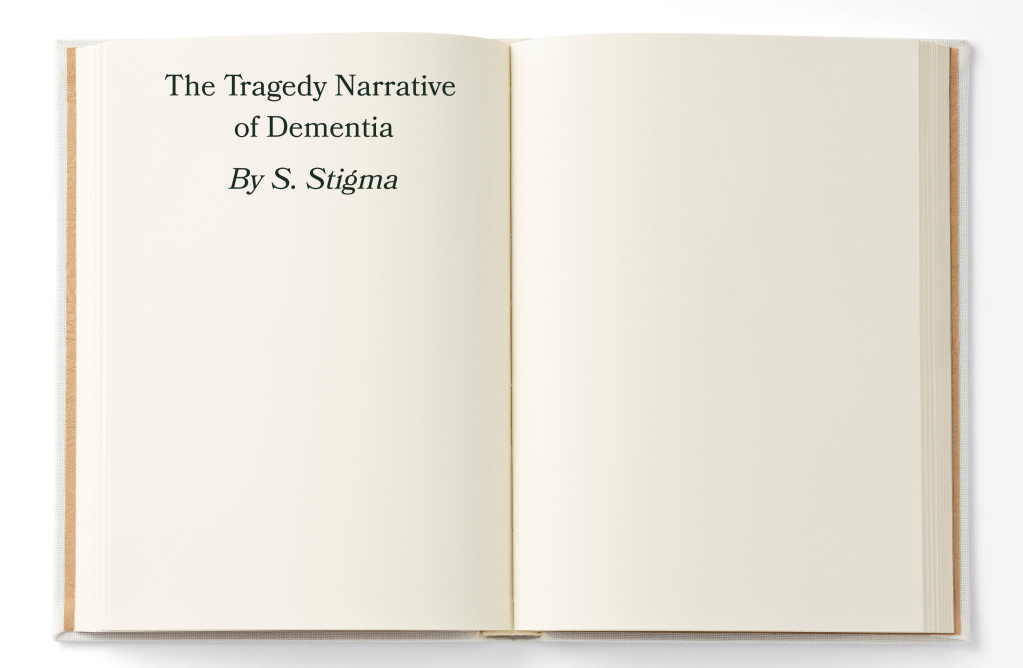
DemSim, by mostly focusing on what people living with dementia canโ€™t do, and trying to equate dementia with frustration, anger, anxiety, loss, and deficit, I worry that you focus on the tragedy narrative of dementia. This is a part of the stigma of dementia, and tells us that the experience of dementia is all about decline and loss.

Living with dementia can be very hard. But we can neither presume this is the experience for every person, nor only focus on what people have difficulty with. If people around me defined me by what I had difficulty doing, I donโ€™t think that would be the full picture of me. I wouldnโ€™t want people to only see that about me.

This is not the whole story of dementia, DemSim. It is again a bummer that this is all you want to talk about.

I worry that this tragedy narrative of dementia evokes sympathy more than empathy. Sympathy is when we feel bad for a person – we pity them. With empathy we are trying to understand someoneโ€™s experience from their perspective. In the words of Brene’ Brown, โ€œempathy drives connection while sympathy drives disconnectionโ€.ย  This is because, with sympathy, we create distance by holding someone at an armโ€™s length from us โ€“ โ€œthat poor personโ€. With empathy, we sit with the person โ€“ โ€œI am with youโ€. Empathy motivates us to move closer to people and try to understand their lived experience.

I worry that you might be propelling disconnection, and I donโ€™t think you are meaning to do that.

DemSim, you describe yourself as a firsthand experience of living with dementia, yet you do not include the voices of people living with dementia. I worry that people spending time with you think that this is definitively what it is like to live with dementia. Yet, without hearing from people living with dementia themselves, we cannot know what it is like to live with dementia.

You, DemSim, cannot know what it is like to live with dementia. How would you?

Each person experiences living with dementia differently, based on many factors: their own personal factors โ€“ physical health, personality, life history, social supports, socioeconomics, etc.; the type of dementia they have; the areas of cognition that are affected for them and to what extent; where they are in their dementia, etc.ย  So there is no one way to experience dementia.

It would be difficult for any of us to say how a person experiences dementia. People living with dementia tell me it is even difficult for them to say how they experience dementia, because it changes day to day for them.

DemSim, I worry that you are perpetuating a widespread misunderstanding of dementia. While some people who have dementia may experience some of the things you simulate, like vision challenges, discomfort in their feet, and challenges with maneuvering things with their hands, these things are not necessarily a part of dementia itself.

I think you know that dementia is separate from these other medical conditions, and that not all people with dementia have them, but the people who spend time with you might not. There is a lot of misinformation about dementia. And the seed has already been planted when people commonly confuse aging and dementia

I worry that your story of dementia doesnโ€™t include the actual cognitive changes of dementia, which is really the root of what dementia is. Dementia is so often described as being about personality changes and behaviors, particularly in a negative way. But people hear less about the actual parts of cognition that are affected, more than โ€œmemory lossโ€, and how that impacts a person living with dementia.

So, after spending time with you, people might not understand what the actual cognitive symptoms of dementia are.

DemSim, I donโ€™t mean to offend you, but when a person spends time with you, and they mainly feel frustrated and angry, they may come away thinking this is all that dementia is, and this is who persons with dementia are.

They might think this is how dementia โ€œmakes you actโ€. And if a person with dementia expresses frustration and anger, it is just their dementia doing that, not all the many normal human reasons why a person feels those things.

We might not try to understand the “why” behind their expressions. We might not try to see their perspective, and how they are seeing the world differently. We might think that the symptom we are addressing is anger, not pain or challenges with information processing or unhelpful communication or being asked to do something a person doesnโ€™t do. We might put more attention on the โ€œproblem behaviorโ€ than the overall well-being of the person. So we focus more on making their anger go away through medication, and less on finding out what a person needs.

I need to share with you, DemSim, that I was frustrated when spending time with you. But I didnโ€™t attribute this feeling to what it might be like to have dementia. It is what it feels like to be human. Spending time with you seems to tell us that when humans are put in situations in which they are subjected to sensory overload, cognitive overload, and anxiety-producing experiences, they will likely all experience the same things โ€“ frustration, anger, confusion, impatience.

So it is not about dementia, but being human.

I think this is the story we need to tell.

And the WHOLE story, DemSim.

Maybe you are wondering, DemSim, why I am writing this. This was not something I needed to do. It is unsolicited.  So why?

I’m writing this because I feel like I have to share what’s in my heart. I have to share these concerns that I have about you. Not just for me, but for people living with dementia. I am not sharing this in a paternalistic way of protecting people living with dementia. I’m sharing this because the things that I have learned from people living with dementia do not seem to be aligning with some of the values I see in you, DemSim.

DemSim, you are very well liked and maybe people have been afraid to bring this up. But I want to believe that this would be concerning to you if you thought that you were unintentionally contributing to stigmatized views of dementia.

I do appreciate the attention that you have given to the experience of people living with dementia, which had not gotten attention for a very long time.

You do make the good point that the environment, even society, might set people living with dementia up to fail, just like your simulation does. The systems we currently have do not adequately support people with dementia to really live their best life.

Maybe people spending time with you can reflect on that, how they can create different systems that better support people living with dementia, to enable them rather than disable them. Maybe they can think about how we, as individuals, can impact the experience of people living with dementia, by seeing them as whole, capable, and focusing on what they can do rather than what they canโ€™t.

I ask that you might consider promoting another narrative of dementia that focus on the personhood of people. You have such an opportunity to influence the story of dementia!

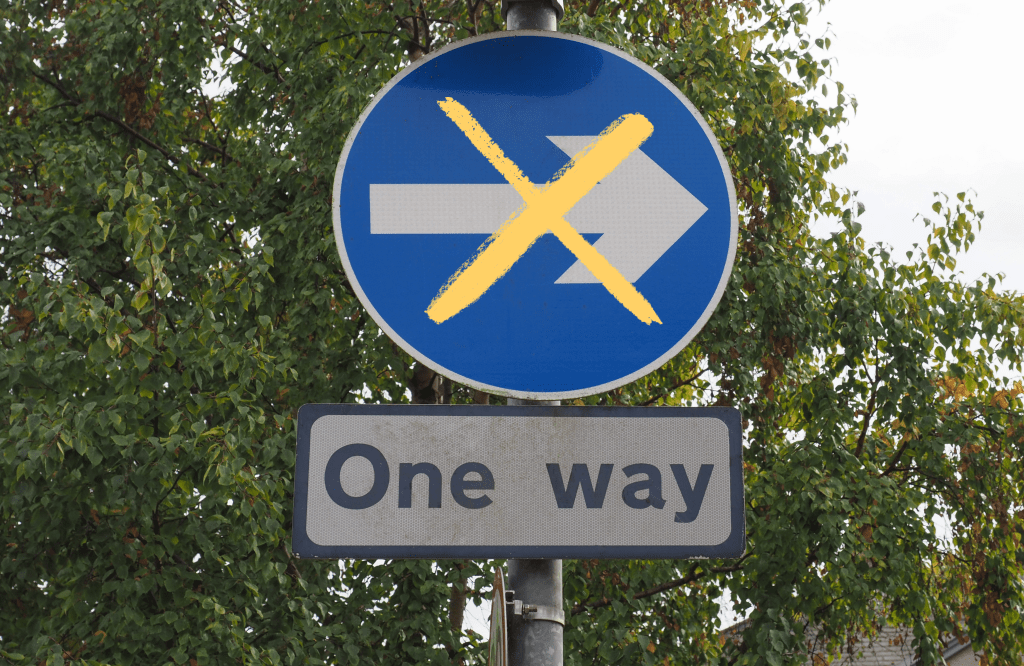
I ask that you consider how you could incorporate the voices of people living with dementia, and not just people’s deficits or challenges but their possibilities, their capabilities, their assets. In doing this, you would open a gateway for society to more deeply engage people living with dementia, not just seeing them for what’s “wrong” with them, but seeing them for what’s right with them.

With Love,

Sonya the Revisionary Gerontologist

Being Dementia Inclusive: A Road Trip

I am reading a book called Soul Medicine for a Fractured World by Liza J. Rankow. It is not-light-reading in the best possible way. It is a book about crisisโ€ฆand hope. It is about transformation and building new worlds.

I am pretty familiar with transformation. It has been the focus of the work I have done for 30 years. One part of this has been transforming long-term care. Within which there has been a lot of both crises and hope. And building of new worlds.

Another part of my focus has been advocating for transformation about dementia, within which I have also seen both crisis and hope.

And we are building new worlds.

We have been building a โ€œdementia inclusiveโ€ world. Note: This, not ironically, is because, after the crisis of not including people living with dementia, we started hearing and valuing the voices of people living with dementia.

You might notice that I said building a dementia inclusive world, rather than we have built a dementia inclusive world. Because we are still in the process of transformation โ€“ between the old world of dementia that is highly stigmatized, medicalized, institutionalized, and a new world of dementia.

What will this dementia inclusive world look like? What do we think dementia inclusive means?

The process of transformation is never linear. Neither is this blog. So buckle up for this winding path of my brain as it explores what dementia inclusive means.

As a starting point, this is how the World Health Organization defines a dementia-inclusive society:

โ€œA society in which people with dementia and their carers fully participate in society and have a place in it. It is a society where they enjoy respect, freedom, dignity, equality, accessibility and quality of life. It is one where they are empowered to live independently, free from stigma, discrimination, exploitation, violence or abuse.โ€

I think that is a good definition. And I think it needs unpacking.

Of course, the idea of being dementia inclusive is not just at the โ€œsocietyโ€ level, but at all levels. We can be dementia inclusive in our cities, our communities, our care communities, our homes, our minds.

Unfortunately, becoming dementia inclusive does not happen just because we say it needs to.

Dementia inclusion is an โ€œeffortโ€. It is an effort because we have to unlearn the deeply embedded beliefs that are a part of the stigma of dementia.

I am not trying to be Negative Nelly, but history has told us that very important efforts to be inclusive have had their challenges.

I am curious. What makes a movement to be inclusive fail?

I asked AI, and this is what it said:

โ€œA movement can say it wants inclusion and still fail if it only asks people to โ€˜fit inโ€™ instead of changing the system itself. Real inclusion usually requires redesigning rules, spaces, expectations, and power so people can participate without having to erase who they are.โ€

Oooh, changing systems. Itโ€™s like you see me, AI. Right up my alley.

Because you know what has to happen for us to change systems?

Changing paradigms! Oh my, systems and paradigms. Two of my favorite things.

So what would be the paradigm of dementia inclusion?

I have thoughts. Of course, they are not entirely my own. They shouldnโ€™t be! That would not be inclusive.

These thoughts are driven by my experiences of listening to many people living with dementia and their families and friends, and people who support them.

At the core, dementia inclusion means ensuring that people living with dementia are included. This might mean that people living with dementia are offered every opportunity to participate fully in society, to use their strengths, to use their voices. This might mean that people living with dementia are not seen as โ€œotherโ€, are not abnormalized or pathologized. This might mean that people living with dementia are seen as us rather than them.

Dementia inclusion means that people living with dementia are included in decisions about themselves, about what support or care they might get or not get. It means they are included in creating the systems that support them to live their lives.

Dementia inclusion might mean more than being included. It might mean the people living with dementia drive changes, create, build, maybe even destroy.

Dementia inclusion means a focus on personhood. If people living with dementia are to be included/more than included, they are included/more than included as multi-dimensional, unique human beings who are not defined by their diagnoses or grouped by their diagnoses. ย 

Dementia inclusion sees people living with dementia as more than their cognitive changes, but recognizing cognitive changes are a part of how they are living their lives.

Dementia inclusion means offering every opportunity for people to live well and have their needs met, but also honoring their choices when what they want might not be the same as what we want. This is because, to be inclusive, we are seeing a person living with dementia as being no different than us, with the same rights as any human being.

If you are wondering what this means, it is from my blog “What are We Fighting FOR?”

Dementia inclusion means fighting against the stigma of dementia that sees people living with dementia as dangerous, incapable, unintelligent, unaware, lost, gone. Dementia inclusion means fighting for a paradigm of dementia that sees people living with dementia as whole, capable, valuable, contributing, having strengths, fully human, citizens.

Dementia inclusion means removing or decreasing barriers that make it difficult for people living with dementia to live fully.

Dementia inclusion does not mean โ€œusโ€ creating services, systems, supports, care communities that meet โ€œourโ€ needs, and then expecting people living with dementia to fit in or adapt to these things we created for them.

In care communities, dementia inclusion means that people living with dementia are supported to live fully wherever they live in that community. That means that people in independent living who have dementia are actively supported to live the life that is important to them, and people in memory care are actively supported to live the life that is important to them. It means they are not defined by their diagnosis, but supported to LIVE with their diagnosis.

Dementia inclusion means that people living with dementia are active agents in their lives, not perceived as passive recipients. This also includes the reality that people living with dementia may need support from others to be active agents in their lives.

Dementia inclusion means being willing to have open conversations about risk and safety, and letting go of the idea that safety is the main goal of how we support people living with dementia. Interestingly, the conversations about inclusivity outside dementia talk about safety in a very different way. Those conversations about how to be inclusive include the importance of creating safe places where people can feel respected, heard, accepted, be themselves i.e. a type of psychological or social safety. So, maybe we can think differently about how we create safety in dementia inclusion.

Of course, this is not everything dementia inclusion is.

The term โ€œdementia inclusionโ€ doesnโ€™t seem to adequately hold all these things that it is. It is bursting with possibility and hope. Might it lead us in the right direction?

How do we apply this paradigm of dementia inclusion?

We might apply this paradigm of dementia inclusion to systems. This includes the systems in everyday life for people living with dementia โ€“ how government, neighborhoods, organizations, businesses, individuals, etc. support or donโ€™t support people living with dementia. It also includes the โ€œsystemโ€ of supports and services for people living with dementia โ€“ the medical system, care communities, social innovations, etc.

But we canโ€™t just build on top of things that are unstable. We have to address the reality that there is still a lot of dementia exclusion showing up in systems.

So dementia inclusion cannot be a band aid that is covering the boo-boo of dementia exclusion. That might not be the right direction.

We need to be willing to question longstanding practices and hold them up to a new paradigm of dementia inclusion. And if they donโ€™t hold up, we need to be willing to think of a new way of doing them.

We might apply this paradigm of dementia inclusion as an individual.

Moving forward with dementia inclusion means that each of us are included in this. We can each think about what dementia inclusion means. How are we supporting it? How are we hindering it?

And of course we have to keep including/more than including people living with dementia in the conversation about inclusion. We are building new worlds together.

This is being inclusive, but it is also recognizing that dementia inclusion advances our humanity. Dementia inclusion is not only โ€œforโ€ people living with dementia. It is about all of us, with all of us.

“The gifts of the soul abide in us. They are the medicine that is needed for the world to make the transition from destruction to new life. The journey also requires we consider what within us may need to die so a greater wholeness can express. What are the patterns, beliefs, identities, and assumptions that are holding us back? Releasing them is also part of the healing process. Each of us has the capacity to contribute to the necessary transformation.” – Soul Medicine for a Fractured World

Becoming Who You Are

I was talking with my friend and colleague, Sister Imelda Maurer.

Sister Imelda is a gerontologist, former nursing home administrator, Sister of Divine Providence, and an Advocate with a capital A. She has devoted her life to standing up for others and currently this includes people living in long-term care communities. Her life as a change agent has been long and it is not unusual when you are talking with Sister Imelda that she casually says something like, โ€œBack when Sister Bernie and I were organizing the textile workers in Appalachiaโ€ฆโ€

Anyway, I digress. Sister Imelda and I were talking about supporting people living with dementia in residential care communities. Frankly, we were sharing our frustrations. About how the medical model of care does not truly meet the needs of people living with dementia. About the stigma of dementia that sees people living with dementia as โ€œnot thereโ€ or less than, and how this manifests into how we create systems that are lacking in truly honoring the human spirit.

Sister Imelda tells me a story about “Sister Catherine” (real person, name changed).

Sister Catherine is a fellow Sister who is living in a nursing home. She lives with dementia and she is not happy with where she is living. Sister Imelda had asked her what the nursing home could do differently.

Sister Catherine says, โ€œI wish they would let us become who we are.โ€

Whoa.

 Letโ€™s unpack this profound, beautiful sentence.

With these words there is the expressed sentiment that Sister Catherine not only knows who she is, but feels that she cannot be herself. It leads one to question whether, when we hear that a person with dementia has lost a sense of self, it is because we are not creating the conditions for a person to be themselves. In some cases, we might be actively keeping a person from being themselves.ย The self is there. It just cannot be expressed. It cannot be LIVED.

Then there is the fundamental idea of becoming oneself. This expresses that Sister Catherine is โ€œstillโ€ growing as a person. She is evolving. Maybe she is changing into something else. Maybe she is becoming more herself.

We often say things about people living with dementia like, โ€œShe is not herself anymore.โ€ Or, โ€œHe is not the person I knew.โ€ Yes. Maybe. But what about seeing a person for who they are now? What about being curious about who someone is becoming?

โ€œI wish they would let us become who we are.โ€

This simple sentence speaks to a lack of acceptance of who Sister Catherine is. And yes, a suppression of who she is. “They” are not “letting” her be who she is. Why do “they” control this? Who do โ€œtheyโ€ want her to be? Who do โ€œtheyโ€ not want her to be? Is she โ€œsupposed to beโ€ someone in a nursing home?

Why canโ€™t she become who she is?
I feel it is important to point out that Sister Catherine, when asked what could be better, did not talk about the food, or the care. Or the indicators of quality of care and life that nursing homes are primarily judged by.

She instead talked about the fundamental, unchangeable need to be human.

What if the purpose of a nursing home, or a senior living community, was to support a person in becoming who they are?

I am serious.

What would this look like?

What would this not look like?

I donโ€™t think it would look like anything we currently have.

When you look up the word โ€œbecomingโ€ and its origins, here are some of its meanings:

To arrive

To come to be

To happen

How hopeful are these words?

In German, “becoming” derives from the word โ€œbekommenโ€, which means to receive. When we receive things, there is a giver.

Nursing homes and senior living can be givers. Maybe they give opportunities for becoming, instead of taking.

Many thanks to Sister Imelda for her many inspirations to my thinking and for challenging us to think differently. She is indeed a facilitator of becoming. I hope that Sister Catherine keeps becoming who she is.

My Butterfly Buddy Who May or May Not Be Our Late Dog Blue

First, I should let you know I am okay. Don’t worry.

I have written about this before.

To catch you up, I believe that our dog, Blue, who died in 2018, comes back to us in the form of a Monarch Butterfly.

In this silly, pain-filled, yet still beautiful world, why would one not believe this?

When Blue first died, he came back to me rather often. Butterflies would follow me down busy streets in Washington DC. They would dance around me in fields. They would come out of nowhere while I was having lunch outside in a cute little town I was visiting, and had never been to before.

Then, I did not see him for a long time.

Perhaps he had other things to do. I donโ€™t know.

A few weeks ago, I was walking past our neighborhood garden. A butterfly dive-bombed me.

Oh, hello.

I smiled at him and kept walking. This could be any butterfly.

A few days later, the same.

And then again and again.

I started to look for the butterfly, changing my walking path so I could visit him.

Obviously, Blue has come back to be with me.

He seems changed. But I know it is him. It is kind of like when Gandalf the Grey comes back as Gandalf the White, for those of you who are Lord of the Rings fans. (If you are not, very succinctly, Gandalf the Grey is a wizard who dies, and when he comes back as Gandalf the White, he has even more wisdom and power.)

Anyway, maybe Blue also had some sort of exciting existential transformation and he couldnโ€™t wait to show me. He had to share it with me. ย I canโ€™t explain what happened to Blue the Butterfly, why he was different, or why he was here, but he was. Trust me.

Why am I telling you about this? What does this have to do with revisionary gerontology, with my work in changing the culture of aging, dementia, and long-term care? What has this to do with honoring personhood? With seeing people for what is right with them?

I donโ€™t know.

Maybe it has to do with everything.

I have been trying to say โ€œI donโ€™t knowโ€ more often. It is very freeing actually.

I donโ€™t know…….

And, there is something very essential about this butterfly buddy of mine, who may or may not be Blue.

Maybe there is something essential about finding a small moment of joy.

Maybe there is something essential about seeing something in someone that you did not expect to see.

Maybe there is something essential in knowing something has changed, but is also the same.

Maybe it is something essential about stopping for a moment and just paying attention.

Maybe there is something essential about looking for something, for the smallest thing, that makes you feel good, like everything is all right with the world.

Maybe there is something essential about being reminded of beauty.

I donโ€™t know why, but when I see the butterfly, it makes me think of other things too.

A person living in a nursing home sitting outside in the sunlight, taking a nap with a serene face.

I see a Zoom gallery of people living with dementia who are coming together to hear and see each other and support each other.

I see a person look at her wife, who lives with dementia, and say that she loves her more than ever, and that she is the best thing that ever happened to her.

I see one of my students telling me about her dreams of how she wants to make things better.

I see a nurse aide bringing her baby to meet the people she cares for in the senior living community where she works.

I see the hope of better systems to support people who live and work in long-term care.

I donโ€™t know….

but I think this butterfly has everything to do with the work I do.

(Blue would of course know this. He was a rather smart dog.)

I do know that when I see my Butterfly Buddy who may or may not be our late dog Blue, something important happens.

Maybe it is like an opening in the world?

Gaslighting & Gerontology

Iโ€™m starting to feel a little gaslighted1 about what a gerontologist does.ย 

I mean, I think I know what a gerontologist does. I am a gerontologist. But maybe I donโ€™t know? Maybe Iโ€™m wrong? (Classic gaslighting.)

I ask myself, do I know what gerontology is? So I go to the source, my professional society, The Gerontological Society of America. This is the definition I see:

โ€œGerontology is the study of aging processes and individuals across the life course.โ€

Yup, that is what I thought too.

โ€œIt includes:

  • The study of physical, mental, and social changes in people as they age;
  • The application of this knowledge to policies and programs.โ€
  • The investigation of changes in society resulting from our aging population; and

Sounds right to me.

โ€œGerontology is multidisciplinary in that it combines or integrates several separate areas of studyโ€ฆโ€ฆโ€

Yup, that tracks.

โ€œGeriatrics, the branch of medical science concerned with the prevention and treatment of diseases in older people, is a part of the broader field of gerontology.โ€

Hmmm.

This last sentence confuses me. I knew that medical aspects of aging are a part of the aging experience, but I didnโ€™t think that the field of geriatrics was a part of gerontology.

I thought geriatrics was a separate field from gerontology, because it is a branch of medicine, and gerontology is distinct from the field of medicine.

If geriatrics is a part of gerontology, can geriatricians call themselves gerontologists? If geriatricians are gerontologists, is gerontology a part of the field of medicine?

This seems very confusing.

Maybe it is just me that is confused. What do other people think?

One way to see what a gerontologist is, is to do a search for gerontology jobs.

Here is what happened when I did a search for โ€œgerontology jobsโ€ in google. I saw a lot of jobs for physicians and nurse practitioners. Interestingly, when I did a search for โ€œgerontologistโ€ jobs, there were no physician jobs, but most jobs that popped up were clinical, as in โ€œclinical gerontologistโ€. Interesting, because most of the gerontologists I know are not clinical. In fact, almost none of them are. Now, I do know some gerontological nurse practitioners, but they donโ€™t refer to themselves as gerontologists.

Interestingly, when I searched for โ€œgerontologistโ€ in the AgeWork career site, which is a part of the Gerontological Society of America, there were also a sizable number of physician positions listed. Again, interesting and confusing.

In my experience, most gerontologists would not be qualified for any of these jobs, as they require clinical training and/or medical degrees. And gerontology degrees do not typically include either. Confusing, But maybe I donโ€™t know what a gerontologist is?

Another way to get clarity on what a gerontologist does, is for me to pay attention to what people say when I introduce myself as a gerontologist out there in the world.

Almost all of the time I am mistaken as a geriatrician.

Here is a partial list of recent experiences when I told people I was a gerontologist and they thought that meant I was a geriatrician:

  • A local aging network meeting where professionals in aging asked where I practice and see patients
  • An event on the topic of dementia, that was offered by individuals in the art community, but whose audience were members of the public who assumed I was a doctor
  • A conversation with a national advocate in aging and caregiving
  • A conversation with an individual who heads up a program for people living with dementia
  • A presentation I gave to a group of older adults about the stigma of dementia
  • In interviews I had with people living with dementia
  • A conversation with an administrator at a senior living community
  • My neighbor, who is an older adult and navigating several health issues
  • Another neighbor who works in healthcare
  • My mammogram technician
  • My oral surgeon
  • The creative reuse center where I volunteer
  • A dean at a university that has a gerontology program

So maybe I REALLY donโ€™t know what a gerontologist is.

What I do know is that I am hearing messages from multiple sources that there is GREAT confusion in what a gerontologist does, and for the most part, it is generally confused with being a geriatrician.

Yet, I feel like I am being gaslighted. Do I really not know what a gerontologist is? If I am to look at job positions, it does not seem like I do. If I am to speak to the general public, it does not seem like I do.

Am I wrong? Maybe I have gotten it wrong all along.

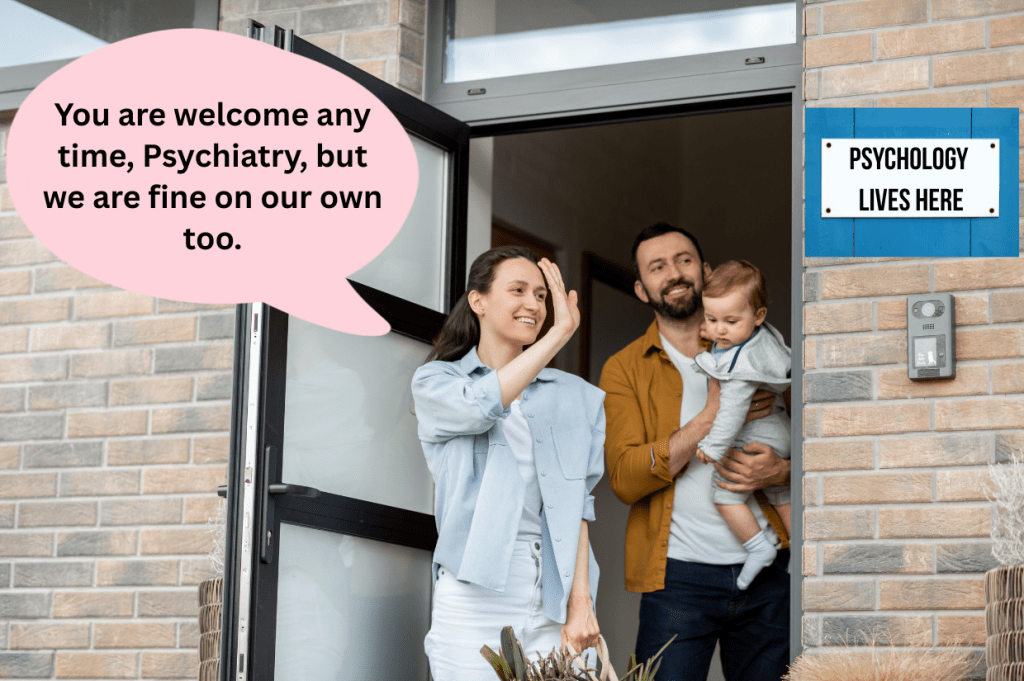
Sometimes when I get confused about things, I try to look at other examples in parallel universes to test out ideas. So, a similar example might be found in the field of psychology vs the branch of medicine called psychiatrics. They are similar in that both relate to mental health and the study of the mind, brain, and behavior, just like gerontology and geriatrics both relate to aging.

But there are also clear differences, especially when you are talking to a psychologist vs a psychiatrist. I donโ€™t think psychiatrists would consider themselves psychologists, or vice versa. I also donโ€™t think psychology would consider itself the umbrella term that encompasses psychiatry. It seems like they are comfortable being their own thing.

To the general public, there might be some confusion โ€“ I definitely have heard people use the terms psychologist and psychiatrist interchangeably, and not really know the difference.

It is a little different than gerontology, in that it seems clearer what a psychologist is. There is still confusion, but, as a field of study, they seem to be pretty confident about who they are.

I do not feel this way in gerontology. Maybe we gerontologists know who we are, but then we receive very confusing messages from out there about who we are. Which makes us feel like we are being told another story about who we are. Which makes us question who we are.

This feels to me like gaslighting โ€“ โ€œtheyโ€ are making us question who we are. By sowing confusion about what gerontology is and what gerontologists do. I am not sure who โ€œtheyโ€ are. Maybe “they” are not a group of people but a paradigm of aging. I don’t know. But I think the gaslighting is somewhat successful in that we, as a field, seem confused, and as a result, we are presenting a confused appearance to the public. ย 

This seems unfair to perpetuate a confused image of gerontology to the public. At the very least, they don’t know what we are capable of and how we might be useful.

A lack of clarity in what gerontology is and isnโ€™t is also a missed opportunity โ€“ to promote the reality that aging is more than medical, that it does not need to be regularly associated with medicine.

Even more, it is a missed opportunity to define gerontology as a multidimensional approach to aging that includes all aspects of living and being human.

What an opportunity there is to distinguish the experience of growing older and its complexity as distinct from medical or clinical. ย Every time I talk to a person and they think I am a geriatrician, I am reminded of this deeply held paradigm in the general public that aging is mostly about medical stuff. It is almost as if they are not sure what else there could be?

I should note that gaslighting is a result of power imbalances. Medicine has more power than gerontology. I think that is a truth. I am not saying that medicine is the gaslighter. I am saying that the possible perception that medicine is more important than other aspects of aging could be a source of where the gaslighting comes from. And I am also not ignoring the reality that geriatrics itself is considered less important than other branches of medicine, under resourced, and has their own stigmatization issues. That is why we need each other! But maybe we also need to claim our own identities.

There are questions still. How do we integrate the overlapping fields of study that are a part of gerontology but maybe not actually gerontology? What distinguishes gerontology? Most importantly, what do these differences mean to the people we ultimately serve, older adults themselves?

Gerontology, we need to confront the gaslighting. We need to take back the power and address our confusion. It is uncomfortable, but so is not knowing who we are.


  1. The modern definition of gaslighting is a psychological manipulation technique in which a person tries to convince someone that their reality is untrue. (Definition found here.) โ†ฉ๏ธŽ

Being Boomer

This post is not about aging or dementia.

It is about love, connection, loss, grief, and joy. Living.

So maybe it is about aging and dementia?

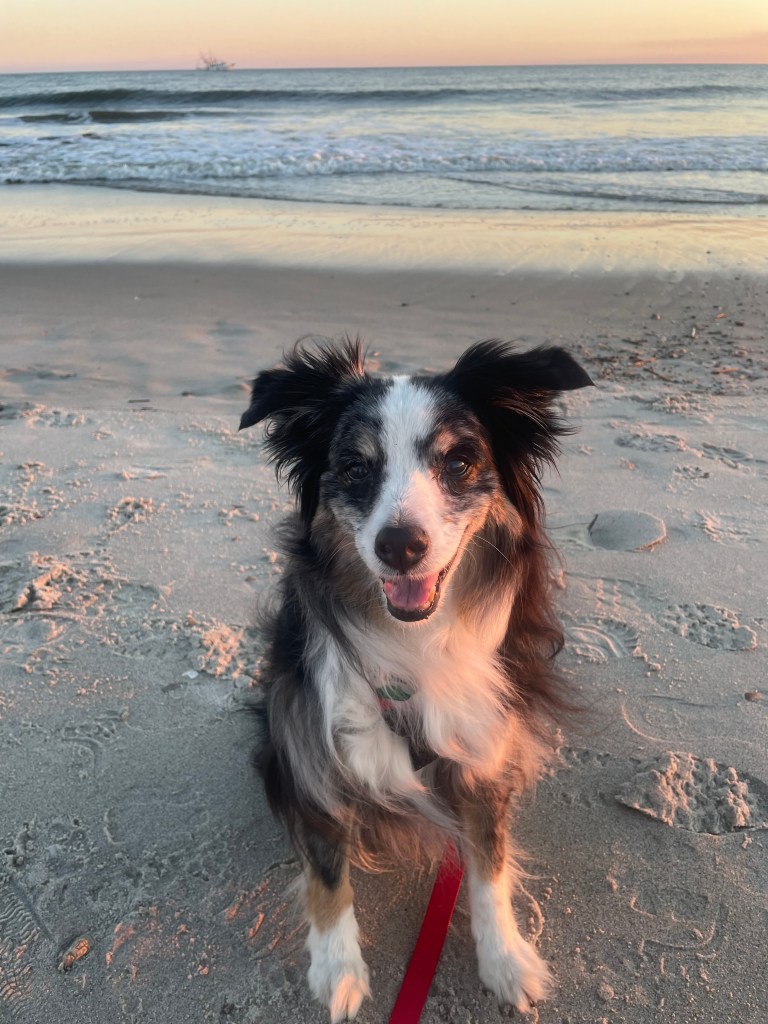
On the one-year anniversary of the death of our dog, Boomer, I share his obituary.

Boomer Barsness

February 2, 2011 โ€“ March 6, 2024

Boomer, aka Booms, Boomie, Boomsie, Boomarang, Boom Boom, Boo, and Boo-Boo, left this Earth Wednesday March 6, 2024 surrounded by his favorite human, Sonya, and spare human, Brendan. Just kidding, he loved them equally and for different reasons.

Before he came to Sonya and Brendan, Boomer spent the first 10 years of his life with his best dog friend, Wilbur, and his human family, in Washington DC. When Wilbur died, Boomer became extremely depressed, and due to challenging family circumstances, his humans made the very difficult choice to find a new home for Boomer where he could have the attention and healing he needed. 

Ten-year old Boomer came to Sonya and Brendan as a foster through New Spirit for Aussies, a rescue for Australian Shepherds. Sonya and Brendan were quickly won over by his endearing and weird qualities, and he was adopted by them a month later.

Sonya and Brendan were a perfect fit for Boomer. With both working from home, Boomer had a lot of human time and attention. As a Velcro dog, Boomer was thrilled to have humans around him most of the time.

When Boomer moved in with them, Sonya and Brendan quickly realized that Boomer did not know how to give or receive affection. After many sessions of forced love, sometimes overlove, Boomer developed a tolerance for affection, and even began showing it. His shows of affection were authentic but awkward, with him rather aggressively throwing his head or whole body onto your body. When receiving affection in the form of deep belly or head rubs, Boomer seemed to lose himself in it, making weird groaning noises. He loved affection in the form of baby talk and little soft kisses on his head, until he didnโ€™t, and then would turn his entire head or body away from you, subtly letting you know he was done.

Boomer had several interests.

Boomer loved light reflections. In Sonyaโ€™s home office, he would watch the changing light on the walls or ceiling for hours, doing little tap dances of joy while he followed them, his little nubbin twitching excitedly. In the car, Boomer also loved watching the light reflections, which was less cute, as he felt he needed to attack them throughout a car ride. This resulted in Boomer spontaneously jumping at the car roof, the dashboard, or Sonya and Brendan, to catch the reflections.

Boomer also loved following lasers, but he was only allowed to do this sparingly, as it made him quite neurotic.

Boomer was obsessed with squirrels, and would take any opportunity to chase after them. This is the fastest one would ever see Boomer move. Boomer particularly found it important to follow a squirrel to its tree to be sure it did go up the tree. Boomer was very detail-oriented.

Boomer likened himself to a detective, always searching for new knowledge. If Boomer came upon a bush or tree that was peed on by another dog, he would take in the scent with utmost seriousness. Then he would sniff his own wee-wee to see whether the pee matched. If not, he would move forward in peeing on the bush to ensure it did indeed now have his scent. Mystery solved!

Boomer was a unicorn โ€“ a low-energy Aussie. He was quite happy spending his days lounging in Sonya or Brendanโ€™s home offices. It is likely he picked up a good bit of gerontology or data science and could probably easily have filled in for his humans in a work crisis.

Boomer was clumsy for an Aussie. He would misjudge his jumps onto the couch, and couldnโ€™t really catch a ball for the life of him. This did not seem to affect his ego; he was not high achieving but just happy with being himself.

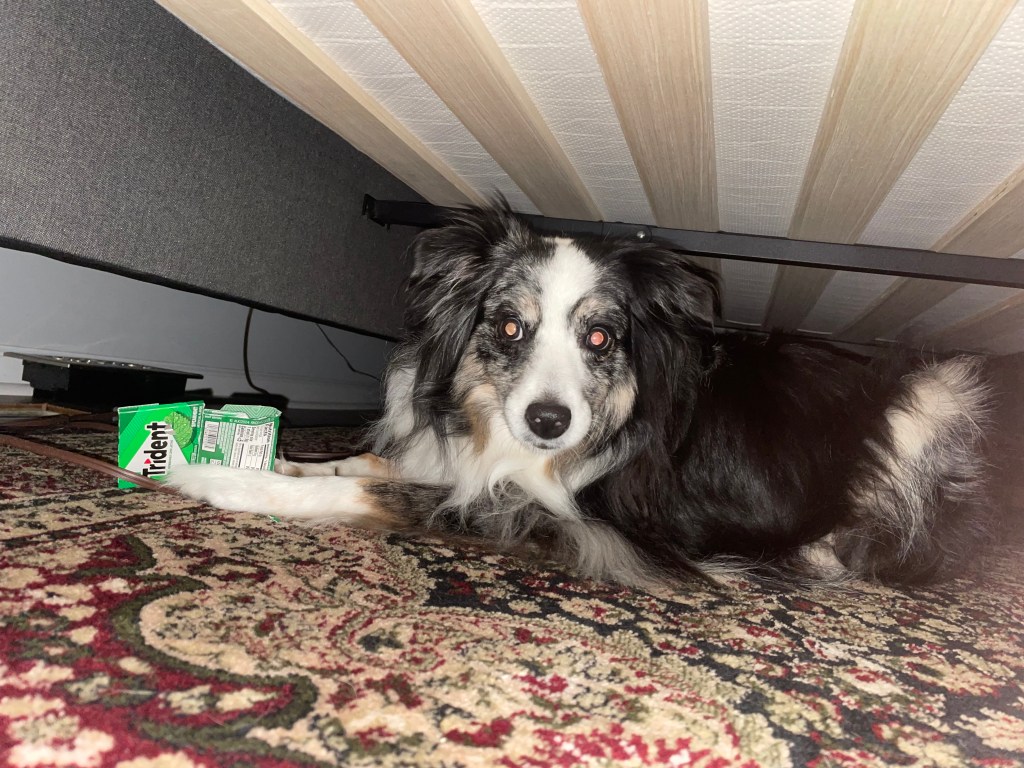
Boomer had very little mischief. About 6 months after being adopted by Sonya and Brendan, Boomer started retrieving a single tissue from the the trash and leaving it in the middle of the floor for all to see. It was a valiant, but subtle, attempt to exercise mischief, as if he really didnโ€™t know how to do mischief. His humans would cheer him on for trying. Eventually he took it up a notch and started stealing gum and hiding it under the bed, although he would never eat the gum.

One of Boomerโ€™s most endearing qualities was his โ€œswimmiesโ€. Boomer would lie on his side and move his front two legs as if he were paddling in water. For symmetry purposes, he usually needed to do both sides. Swimmies varied in tempo, from slow and thoughtful, to fast and manic. Boomer did them nearly every day, especially after his morning walk and breakfast, before taking his morning nap. Swimmies seemed to be a sign that Boomer was happy, and that made his humans happy.

Swimmies (Manic Type, Symmetrical)

Boomer had no tolerance for humans exercising and did what he could to discourage it. There was no better place for Boomer than in the middle of a yoga mat when one was doing a downward dog.

Boomer was a love bug but did have his nemeses. This included the mail carrier Latiesha, Prime delivery people, UPS delivery people, FedEx delivery people, and all food delivery people. Latiesha, thank you for your graciousness in always smiling and laughing at Boomer even when he terrorized you from the front window. Boomer also had as his nemesis โ€œbrown dog around the cornerโ€, who would bark incessantly at Boomer whenever we walked by his house, causing Boomer to become very emotional.

Boomer leaves behind his heartbroken humans, Sonya and Brendan, who received constant joy from him.

He is predeceased by his hamster-sister, Skittles Lazypants, with whom he had a complex and ambiguous relationship.

Supervised Visit

Boomer is also predeceased by his dog brother, Blue, whom he never met. However, his humans feel pretty confident they would have been great together, with Blue being a strong leader and Boomer a loyal follower.

Boomer is survived by his dog cousin, Oliver. Boomer and Oliver contentedly coexisted at family get togethers, although they occasionally would have a spontaneous yet halfhearted 30-seconds of play together before both deciding that was enough. Boomer is also survived by his other dog cousin, Toby. Toby did not care much for Boomer, but Boomer was too frightened of Tobyโ€™s 5-lb lofty presence to get in his way. Boomer leaves behind his great-dog-nephew, Stanley, who he thought was โ€œa bit much at timesโ€, but could connect with him when they joined forces to bark at delivery people.

Boomer treasured his favorite toy, Lamb. Lamb was quite overloved, and this caused Lamb to have several surgeries, including 4 amputations and 3 squeakie-ectomies. Unfortunately, his other favorites โ€“ unicorn, octopus, and lemur โ€“ suffered a similar fate.

Boomer is survived by several other humans important to him. Boomer spent a lot of time with his grand-dog-parents, Maria and Henry, and considered their home his second home. His grand-dog-mom, Pam, gave Boomer great rubs, and was quite skillful at preventing Boomer from leaping all over everyone to get to light reflections during road trips. Boomer also lovingly leaves uncles Paul and Eric, and aunts Stephanie and Denise, as well as human cousins Lexi, Landon, and Talia.

Boomer was loved. Every day. And he gave us joy. Every day. He was such a good boy.

Being Evidence-Based?

Does everything we do to support people living with dementia need to be evidence-based? (Note: The term “evidence-based” broadly means that a support, service, treatment, etc. is supported by scientific research1.)

Really, I am asking for a friend.

Okay, that’s not really true. It’s for me.

But, actually, it is a for a friend, in a way.

I want to know, on behalf of people living with dementia, why everything has to be evidence-based. Because what if I am a person living with dementia, and things are not offered or available to me because they are not evidence-based?

What if there is a cool program where my friend living with dementia can volunteer with dementia-inclusive community organizations? In this awesome program, my friend receives support to participate in a volunteer opportunity with an organization (whether that means transportation, training, coaching, etc.) and the organization receives support to engage people living with dementia (that could be training, adaptations to support volunteers with dementia, etc.).

Oh, wait. The program is not evidence-based, so it’s not available to her. I am going to encourage her to get to the bottom of this. I encourage her to call the 1-800-EVI-DENCE hotline.

Hello. We are EVIDENCE based here. This is Amelia speaking. With whom am I speaking?

Hello, my name is Faith and I live with dementia.

Hi Faith, it is nice to meet you. I am happy to help you. I am glad you mustered the courage to call me on your own. You know, scientific evidence does indeed support the idea that people living with dementia should exercise their autonomy and set goals for themselves. So that makes it all okay that you called!

Okay….thank you. Yes, I am calling because I heard about this program called the Purpose Project but I have had trouble finding it. Then someone told me I canโ€™t get it because it is not evidence-based. I am wondering if you can tell me how I can get into it so I can try it?

[Sounds of typing]…….Hmm. Can you tell me the name of that program again?

Sure, it is the Purpose Project. It was started by someone named Sonya Barsness but it hasn’t really gotten going yet. She seems pretty cool and passionate, by the way.

Faith, I think I see the problem. Has she gone through the necessary vetting to determine that it is evidence-based?

Um, I am not sure – what do you mean?

Well, has she evaluated the project in a quasi-experimental, or experimental design….

I don’t know. I just know that I would like to do it, and apparently, I can’t, because I read somewhere that I can only do things that are evidence-based.

Yes, that is correct, Faith.

Why, Amelia? I am not understanding.

Well, there are limited resources out there to support people living with dementia, and so, we need to be really careful about the types of programs and supports we suggest. We have to make sure that the things we suggest really work in order to invest in them.

But who decides whether they work? What does it even mean to work?

That is a complicated question, Faith. I have to say that you bringing this up is contrary to the evidence I have that says people with dementia are not able to reason very well. Not sure what to make of that.

Anywhooโ€ฆEach program or idea has to go through a rigorous process to determine whether it is effective – for one program, being effective might be that it results in people with dementia having improved scores on cognitive tests. For another program, it might mean that people with dementia need less anti-psychotics after they participate in that program. And for another program, effective might mean that they have less depression.

Well, to be honest, I am not interested in taking any more cognitive tests, and I definitely don’t want anti-psychotics. And I don’t think I am depressed. So, those things aren’t really important to me anyway.

What is important to you, Faith? Just so you know, I am using evidence-based principles of motivational interviewing.

That’s nice, Amelia. Well, there are lots of things that are important to me. I do want to feel needed, like I am useful. That is why I wanted to do the Purpose Project. Why can’t things be available to me because they could be helpful, or even because I think they are important? Why do I need someone else to tell me what will “work” for me?

[Sounds of shuffling of papers] Umm…..Faith, I literally donโ€™t have answers to those questions in hereโ€ฆโ€ฆ

But back to the program, sure, nothing stops Ms. Barsness from starting it. I mean, it isnโ€™t on the list, so it is a bit of a risk for you because we donโ€™t know whether it will be effective for you.

I will take the risk on finding purpose, Amelia.

Faith, I am struck by how you are both supporting the evidence that people with dementia have a sense of humor, and at the same time demonstrating poor judgment. Yay for Science!

Back to Ms. Barsness trying to offer the Purpose Project, even though it is not on our list. She can try, but because it is not on our list, we wouldn’t be able to help promote it, and it might not be seen as “legitimate” in the aging and dementia community. We couldn’t ask any of our partners, like large community organizations or healthcare systems to use it. I mean, they would want to know the evidence-base, of course. She probably would not get funding to start it, but she could try? And then once she has spent several years doing it, she can apply for more funding to do an experimental study, where she can compare people in the Purpose Project with people who are not in the Purpose Project, and try to confirm her hypothesis that people living with dementia will fare better when they have purpose – I assume that is her hypothesis…..Then she can get on the list, maybe.

I hear what you are saying, Amelia. But coming back to me…. I need this now. Not in 5 years. I don’t have the time for all that.

That is a pickle. According to research, the system does not adequately support people living with dementia, so you are right on target in identifying this gap.

Amelia, maybe you can make a note in your database that this is a gap? That would be great- maybe other people are also seeing this gap so we can try to get things moving forward with solutions.

I am sorry, Faith. I can only put information in here that is evidence-based. And although I really value your voice, it does not qualify as evidence-base. Your call is so important to us!

Sigh. Well, I am not sure what exactly to do next, but thanks?

You are so welcome, Faith. Please remember to work on the six or eight pillars of brain health, depending on what model you are talking about. And keep in mind that while some organizations kindly translate and report research results for public view, you would not typically have access to the actual research articles, to evaluate dementia supports for yourself, unless you are affiliated with an academic institution.

Seems a weird way to close a conversation, but okay. Thanks, Amelia!

I do not intend to send the message that seeking evidence for supports – programs, services, ideas, etc. is “bad”. Clearly, research has shed light on many things that have been helpful to people living with dementia and their care partners.

I do recognize that a program does not have to be evidence-based to be available. However, it needs to be acknowledged that supports that are not considered evidence-based might not be promoted, funded, accessible, or considered “legitimate” in the eyes of stakeholders in the dementia support community.

And this could be limiting to people living with dementia.

If service providers, families, and people with dementia are primarily encouraged to seek out evidence-based dementia supports, this inherently suggests that supports for which there is not an evidence-base are not โ€œgood enoughโ€.

I do recognize the importance of determining whether supports are working, how they are working, and for whom. I also think we need to question whether supports that are non-medical need the same evaluation approach than supports that are medical. Would a dementia choir need to have an evidence-base in the same way that a medication management and reconciliation program might need an evidence-base?

I am trying to present the concept of โ€œevidence-baseโ€ as it might be seen from people living with dementia and their support partners โ€“ they do not have the time to wait for something to help them, and might be taxed by the need to limit themselves to things that are only deemed evidence-based.

I do hope to inspire thought and conversation.

Here are a few questions we might consider:

Does everything we do for/with people living with dementia need to have an evidence-base?

Are there things to support people living with dementia that do not need an evidence-base?

How do we know whether a support works? Who gets to decide?

How do we address supports for people living with dementia for which there might not need to be an evidence-base? Do we still need some sort of vetting? Who does this vetting? Is there a need to educate the public on how to discern information and services related to dementia so that they can participate more fully in decisions about supports?

How do we balance the growing of ideas to support people living with dementia with the need to “vet” them as effective, not harmful, helpful, etc.?

If there are limited supports that are considered evidence-based, and we feel that things need to have some level of legitimacy to be offered to people living with dementia, how can we encourage more supports to go through a process to determine whether they are โ€œeffectiveโ€? How do we make them more widely available? And in a timely manner?

How do we ensure that supports are person-centered, whether we consider them evidence-based or not? Could supports for people living with dementia actually be evaluated based on whether they reflect person-centered values? (Or, support the human rights of people with dementia?)

  1. There are details to how something becomes evidence-based and there is also a lot of variability in how that term is used. BIG topic in itself. How something achieves the “designation” of evidence-based is driven by guidelines set by the government as well as the research community. โ†ฉ๏ธŽ

Being An Emotional and Cognitive Buddy

I have been thinking lately ofย the people I have met in all the nursing homes and senior living communities I have visited. Wow, what a privilege I have had. What a gift to uncover these humans, who are sometimes not seen.

I like to shine a light on them.

I’m thinking of my friend June, whom I met while I was volunteering at a nursing home. June lived with dementia and I would visit her every week and we would just hang out together. June told me how she was a former model, and also that she owned a dress shop for many years. She was very interested in fashion, so I would bring fashion magazines. We would look through them and comment on different styles.

June was very astute and I loved hearing her commentaries on both the outfits and the women who were wearing them. She was very in tune to their moods. “She certainly looks excited,” she would say and point to the model. “Oh my, she does not look happy with that,” she would frown.

I also learned that she loved parakeets and had several throughout her life. In fact, she had bred them. So I would pull up videos of parakeets on YouTube and we would look at them together, which just delighted her. I told her about my parakeet, Abu-Dabi “Larry” Bird (who we called Boo). And then about our cockatiel, Englebird Humperdinck, who I got for my husband as a birthday gift. Unfortunately, Englebird felt like I was his person, rather than my husband, so he would just peck at my husband incessantly when he got too close. This also delighted her.

She told me about her ex-husband, who she said was “good for nothing”. She said other things too about his character, but I cannot print them here. She told me how she “kicked him to the curb and never looked back”. I liked thinking of June all dressed up in her beautiful clothes, surrounded by her beautiful birds, slamming the door on this person who hurt her.

I really enjoyed getting to know June.

One day, as I was saying goodbye to her, she grabbed my hand, looked into my soul, and told me,

“You know, you’re my emotional and cognitive buddy.”

Wow. My heart just about exploded. Is that not the highest praise?

I would never have come up with that phrase on my own. It was perfect.

In my mind, she was telling me a few things. She was telling me about the value of our emotional connection. Maybe she was noticing that I was really interested in what she thought about things. That I wanted to hear what she had to say. I think she was interested in what I thought too. Perhaps she felt that I was a person that she could feel and think with.

Overall, I think she was saying that I got her.

What a beautiful, and unexpected, way of articulating our friendship.

She was my emotional and cognitive buddy too.

Shortly after, I went in to visit June and she wasn’t there in her room. I tried to ask the staff where she had gone. They weren’t really sure. They think she was transferred somewhere else, is all they said.

Transferred. Like a package. A package with beautiful ideas and vocabulary.

I was astounded and hurt that no one was able to tell me where she went. No one even thought of telling me that she wasn’t there anymore. I had been visiting her weekly for about six months.

It struck me that this was probably because nobody noticed I was even spending time with her. I don’t know that anyone noticed June in general.

This was a place where many of the people who worked there seemed to have pretty limited interaction with the people who lived there. I can’t fault them because this was the culture of this place. Probably no one was their emotional and cognitive buddy either. It was very institutional, so, it’s not surprising that the general milieu of the place was not based on connection but disconnection.

Still, it was somewhat devastating to me. Did they not know how beautiful this idea was – to be emotional and cognitive buddies?

I felt grief because this was a real loss to me. I was angry too. They did not see her. Maybe they did not think about where she went because they didn’t think she was there in the first place. How could anyone possibly think a person like June is no longer there, a shell, incapable? You don’t tell people about them being your emotional and cognitive buddy when you are not there.

I am at a place now where I feel sad for the people who were around her in that nursing home, who missed the chance to be June’s emotional and cognitive buddy. .

What does it mean to be a emotional and cognitive buddy? I can’t be sure. But knowing June, I feel like she was expressing this beautiful idea of how we make each other feel seen. June was needing to be seen, and her telling me that I saw her was so powerful to me. It made me feel seen too.

I didn’t just care about June (being an emotional buddy). I was also genuinely curious about her (being a cognitive buddy). And she did the same for me. I can’t stop thinking of how “an emotional and cognitive buddy” is such a great description of something so undefined. June was brilliant.

Do you have an emotional and cognitive buddy? Are you an emotional and cognitive buddy to someone? How do you know?

I never saw June again. I hope someone else is being her emotional and cognitive buddy.

Thanks, June, for being mine. I didn’t get a chance to tell her that, but I think she knew.

What Are We Fighting FOR?

I learned about an interesting thought experiment in a positive psychology class I am taking.1 And it goes like this.

So you are on a walk and you come across a lantern โ€“ you rub it (of course) and a genie pops out. The genie says, “I’ve been waiting for you! I can make you a superhero! But you have to choose what kind of superhero you want to be, by choosing what color cape you want. If you choose the red cape, you are a superhero who is fighting AGAINST things – like injustice hate, discrimination, and evil. If you choose the green cape, you’re a superhero that’s fighting FOR the things you want โ€“ things like peace, harmony, love, belonging and peace. Which cape do you want? “

Which cape would you choose?

The thought exercise goes on to explain that, in actuality, each of us has both a green cape and a red cape. But most of us wear the red cape more often. After all, there are a lot of things to fight AGAINST in our world. Positive psychology tells us that we can benefit from trying to also wear the green cape. We can try fighting FOR things at least as much as we fight AGAINST things. Positive psychology is quick to clarify that the red cape is a good thing. We need to fight AGAINST things. If we did not address the wrongs we see, then the things we are fighting FOR – the things we want to see – would probably not be able to happen. The metaphor they give is: if you are creating a garden and plant all sorts of good seeds, but you donโ€™t pull out the weeds, your garden is probably not going to grow

This exercise resonated with me because I feel like a lot of my work in fighting to change the culture of aging, dementia, and long-term care has been me wearing a red cape. For my whole career I have been fighting AGAINST the institutional mindset in long-term care and AGAINST the systems that do not support us to live well as we grow older or grow with dementia. I have been fighting AGAINST the deficit-based narrative that dehumanizes people living with dementia. I have been fighting AGAINST paradigms of aging that define us by our age or abilities, and overmedicalize the multi-dimensional, human experience of aging. I have been fighting AGAINST the pervasive ageism that is the root of all of the above challenges.

I have always felt strongly that these are things we need to fight AGAINST, that we need to use our voices to point out that these things are wrong.ย  There is so much wrong! It is frustrating as heck because there is always something else to be fighting AGAINST. Every time I pick up a newspaper or look at social media I see the blatant ageist messages, the not person-centered approaches to seeing and supporting people with dementia, a broken system of long-term care and senior living that is too driven by risk avoidance, profit, and maintaining people than supporting people to LIVE well. AGHHH! ย While my red cape is blowing aggressively around me, it can block my view of the good things that are happening too.

Wearing a red cape can be exhausting.

There are other dangers of mostly wearing a red cape. When we only fight AGAINST things, we run the risk of showing others only what they shouldnโ€™t do or believe. Take ageism, for example.

Donโ€™t say elderly! Donโ€™t get birthday cards with ageist messages? Donโ€™t say that aging is awful!

We donโ€™t want to say or do these things, because they are ageist, and we need to learn they are ageist. But if we only focus on what we think aging shouldn’t be, we might not leave room for conversation about what growing older IS. What aging can mean. We might not leave space for exploring how we might talk about aging. We might not leave space for real fears about growing older, and the conversations that can help us be less afraid. If we shame people for their ageism with only our red cape, we might limit the opportunity to really try to change the way we think about growing older. To allow space for honest conversations and questions and learning.

With our red capes we have fought AGAINST ageist injustices, discrimination and stereotypes. In our red capes we have pointed out when language, policies, ideas, articles, and beliefs are ageist and why.ย  We still need to fight AGAINST. But perhaps we need to add the green cape.

I’d like to put on my green cape for a little bit and share some ideas about what I think we should be fighting FOR.

What are we fighting FOR?

We are fighting FOR a paradigm of aging that:

Accepts aging as a part of life.

Identifies aging as a universal experience that we all share as humans.

Celebrates the experience of growing older.

Sees each older person as a unique person.

Includes both the gains and losses we experience as humans.

Recognizes that aging is multi-dimensional and people are multi-dimensional.

Honors that aging is different for each person.

Recognizes aging as a process and transition.

Explores the idea of elderhood and what that might mean.

Sees people with their age, but not defined by their age.

Encourages us to continue to do and and be what is important to us.

Promotes an experience of growing older that has possibilities and growth.

Actively includes older people in communities and life.

Supports older adults as valuable assets.

Sees the perspective of an older person as equally important than othersโ€™ perspectives.

Honors autonomy of how a person wants to live.

Assumes that an older person has an idea of how they want to live.

Seeks to understand individual experience of growing older.

Ensures that the voices of older adults are at the table.

Promotes the reality that older people continue to learn and grow.

Highlights non-medical and non-physical aspects of aging, like the psychological experience of growing older.

Treats older people as equal to people of other ages.

Recognizes the importance of adaptation so people can continue to live in ways that are important to them.

Focuses on living regardless of what cognitive, physical, emotional challenges individuals face.

I have to be honest. When I sat down to do this, it was sort of hard. It was tempting to go to all the things that we need to change about how we see aging in our society. I had to keep telling myself, yes, that needs to change, but what are we wanting to move towards?

I want to be clear that I am not saying we should only focus on the “positive” aspects of growing older. When we put on our green capes we cannot use them to try to dismiss the challenging realities of what people experience as they grow older โ€“ loss, illness, disability, discrimination, cumulative effects of disadvantage. We could use our green capes to fight FOR the understanding that these challenges are a part of the human experience at any age and that living more years might also put us more at risk of them. We could use our capes to expand our vision of growing older and illuminate the multi-dimensional experience of growing older. We could use our green capes to fight FOR a paradigm of growing older where we can all be heard and seen and supported, not just for what is โ€œwrongโ€ with us, but for what is โ€œrightโ€ with us.

The next question is, What does it look like to fight FOR these things? What does it look like, for example, to fight FOR the assumption that an older person has an idea of how they want to live? To fight FOR the inclusion of older adults in communities and life?

There are many other things to think about what we are fighting FOR. What are we fighting FOR in nursing homes and senior living? What are nursing homes and senior living FOR? What are we fighting FOR, for the people who live and work in these communities? What are we fighting FOR related to dementia? What do we want FOR people living with dementia? (If you are worried that I donโ€™t have something to say about any of this, I donโ€™t want to add to your stress, so rest assured I do.)

I am going to think really deeply about what I am fighting FOR. I invite you to join me.

I’m gonna put on my green cape for a while, see what happens.

Shazam.

Note: You might find it interesting that Shazam is a calling to the elder gods who are the origins of power. It is an acronym for Solomon, Hercules, Atlas, Zeus, Achilles, and Mercury. It is indeed a bummer that these elder gods are all men. Something else to fight FOR is an acronym that is a calling to female elder gods. Anybody?

  1. I learned this thought experiment from the Coursera course, University of Pennsylvania’s โ€œPositive Psychology: Applications and Interventionsโ€ taught by Dr. James Pawelski. Thank you. โ†ฉ๏ธŽ

When We Don’t Make the Sauce: An Assessment

I am 23 years old. I am working for a neuropsychologist who generously decides he believes in me and wants to support me in my own quest to become a neuropsychologist. He teaches me how to administer several types of assessments to screen for dementia and depression. So off I go to the nursing home, in my thrift store blazer so I at least appear to be a professional.

I am meeting with Mrs. Sabotino. She is of Italian descent, even having a trace of an Italian accent. She is barely five feet tall. She just moved into the nursing home. I am a little nervous, as I always am when I ask these questions. She is warm and seems happy to have a visitor. This makes me more nervous because I know I am going to disappoint her, as I am not here to socialize with her. I start with the Geriatric Depression Rating Scale.

I clear my voice.

โ€œMrs. Sabotino, are you basically satisfied with your life?โ€

Mrs. Sabotino shrugs. Looks out the window.

I wonder how long I am supposed to wait. Can she hear me?

She interrupts my thoughts.

โ€œWhen I can make the sauceโ€ฆ..โ€, she says evenly.

I make a mental note. Clearly dementia.

I confirm, โ€œWhen you make the sauce?โ€™

โ€œYes. Mrs. Sabotino nods at me like she is bored.

Next question.

ย โ€œHave you dropped many of your activities and interests?โ€

She shakes her head. โ€œYes, because I cannot make the sauce.โ€

I write down โ€œYes?โ€

I start to panic. Maybe Mrs. Sabotino is not going to answer my questions! What do I do? I donโ€™t think I am supposed to be chatty with her. I decide to stick with the plan.

Okay, next question.

โ€œDo you feel that your life is empty?โ€

She nods more vigorously. โ€œWhen I cannot make the sauce!!โ€

“Do you often feel helpless?”

โ€œYes, that is when I cannot make the sauce.โ€

โ€œDo you often feel downhearted and blue?โ€

โ€œYes.โ€ Mrs. Sabotino nods sagely. โ€œBecause I cannot make the sauce!โ€ Her voice raises slightly.

Oh, boy. I was definitely not trained for this. I am in full blown panic mode. Do I write notes about the sauce? I carry on.

โ€œDo you feel pretty worthless the way you are now?โ€

Mrs. Sabotino takes my hand, and looks right at me. โ€œYou seeโ€ฆ.I cannot make the sauce.โ€

We go through the rest of the questions, and each answer is sauce-related.

Although I am a bit confused myself, I decide to administer the mental status exam to her. She gets a low score, one that would indicate, according to neuropsychological interpretation, that a person has limited awareness and high levels of confusion.

Yet, Mrs. Sabotino knew how much she wanted to make the sauce. She was very aware of that. She was not confused about that. She was very certain about that. She knew there was something missing in her world. She could see it. Maybe even taste it. Maybe she could not say where she was. Maybe we would say she was not oriented. But she could tell me WHO she was. She could tell me what was important to her.

I wish I would have asked Mrs. Sabotino more questions. Not questions about counting backwards from 100, or if she would draw a clock for me. But things like, โ€œWho do you make the sauce for?โ€ โ€œHow do you make the sauce?โ€ Or even, โ€œYum, how good does that sauce taste?โ€ I wish I could have listened more.

I wish I would have made sauce with her.

After some time, I decided that neuropsychology was not a great fit for me. And I am eternally grateful for the many people who tolerated my questions, especially Mrs. Sabotino. Something started unraveling in me that day, and made me start questioning how we see people living with dementia. Or, maybe, more accurately, how we do not see them. That sometimes we are looking to see something about them, usually something that is wrong with them, and miss all the other things that are right with them.