

“This place is like a prison.”
This is a comment I have heard several times from people living in long-term care communities (both nursing homes and assisted living communities). Perhaps one might be tempted to dismiss this comment as trivial or expected. “Well, of course Mrs. Wilson does not like it in the nursing home. Who wants to live in a nursing home?” Or, “Dad is just angry that we put him in assisted living”.
But I think this comment deserves examination. One, because we need to consider how close long-term care communities might be to prisons. And two, because examining this comment might provide insight into how we have to change.
First, we need to acknowledge that many long-term care communities are indeed operated as institutions. This is except the relatively few that have deeply transformed their culture from an institutional culture to a person-centered one. We are all struggling with unlearning this deeply ingrained institutional culture.
Then, we need to be honest with ourselves about the various examples that underscore the possibility that long-term care communities are indeed still very much like prisons. Here are six examples of how care communities and prisons have similar qualities.
Note: These are real quotes from real discussions I have had with real people living in long-term care communities, or who have family members living in long-term care communities.
“I am a POTW- ‘Prisoner of this Ward’. I can’t even go outside my room without them sending me back.”
#1. People cannot come and go as they please.
Yeah, but…..(this is the voice of how we have justified this)
We cannot just let frail, ill people, especially people with dementia, roam around. It is not safe.
Or…..(this is the voice of how we might think differently)
It is also not necessarily safe to keep people from coming and going. Rather than putting our energy into keeping people from leaving, we can put it into finding ways to create communities where people want to grow and live. And ways in which they can live as they please.
“No, [I don’t have choice about waking up]. But that is not important to me. It is not important because I have the chance to be sleeping all day. I need to be more active anyway. It is like prison.”
#2. There is a strict daily routine, and everyone follows it. It is created by the people who run the place.
Yeah, but…..
We cannot have people doing what they want when they want to do it. Besides, people in nursing homes like routine. We need to create this structure for them. They like it! Do you see them lining up for meals?
Or…..
People in nursing homes go along with these routines because they become conditioned. Which is exactly the point of strict routines. People lining up for their meals only tells us that we have done a really good job of creating a culture in which people think they have to line up for meals. Perhaps we can consider what it looks like to create a natural flow of daily life, and how this might differ for each person.
“It sucks! Just like jail. Not a person anymore. Offered coffee, I don’t drink coffee. Want to have whatever I want, a cocktail! Want to enjoy myself, even if I’m diabetic, eat what I want sometimes.”


#3. People cannot eat what they want when they want it. In many cases, meals are served at a specific time and there are limited choices as to what is available. Also, a person is restricted from eating what she or he wants because of “special diets”, like someone who has diabetes or hypertension.
Yeah, but……
We cannot let people with serious medical conditions just eat what they want. Their conditions will become unmanageable. They will get very sick. They might die.
Or…..
In the “real world” people make bad dietary decisions every moment. I know I do. Food is important, and so is how we eat. Sometimes I like to eat by myself. Sometimes I like to eat with friends. Maybe we can better understand what it is important to people in terms of food and eating. Maybe we can work with people to come up with strategies of moderation. Maybe we honor that they might not want to make healthy choices.
“In prison they do life for murder and they get one hour outside. Our [residents] here – they do not even get to go out in the garden.”

#4. People have limited access to outdoor space, and when they do, it is typically on the schedule of the people monitoring them.
Yeah, but……
We cannot let people outside without supervision. They might fall! Or, they might climb the fence.
Or…..
Regarding the risk of falling outside, um, do people not fall inside as well? And about the fence climbing – I have heard this response many, many times. I am not saying it never happens, but my guess is that it is not a frequent occurrence. Also, if a 97-year old person successfully climbs your fence, we need to re-evaluate their fitness level. Well done, athletic fence climber!
There are endless benefits to being outside, to having access to nature and fresh air. Perhaps we can put our energies into creating outside spaces that people can use, or ways that people CAN go outside.
“The big difference for me…..having experienced almost six years in a nursing home is that the person gets lost. There is absolutely no conception that this is a mother, this is a person that worked, this is a person who contributed to her society, she is just a number, whatever. She is dementia, she’s this, she’s that. You limit your personhood.”
#5. People lose their rights.
Prisoners do not have full constitutional rights. However, they are protected from inhumane treatment and cruel and unusual punishment.
In long-term care communities, people living there might relinquish rights every day. They might lose their rights to privacy, autonomy…. One might argue that they are subjected to inhumane treatment.
Yeah, but…..
The people living in nursing homes are not able to make decisions on their own. We know what is best for them. Their families know what is best for them.
Or….
According to federal law, people living in nursing homes have the same rights as any American citizen. Perhaps we can think of people living in nursing homes as fellow citizens. We might even call them that. Would that help? Citizen assessment rather than resident assessment? Citizen’s council rather than resident’s council?
“They have had problems with the nurses interfacing with the inmates…there is concern about them getting to know us personally. Why not have a short conversation about how your day is going, what do you need? What can I do for you?”
#6. People who work there are primarily concerned with safety and security.
Yeah, but….
The most important thing is to keep the people living there safe. That is what the government pays us to do and tells us to do. That is what families want. That is what society wants.
Or…..
People who work in long-term care communities are not wanting to act like correctional officers. I don’t think nurse aides become nurse aides because they really, really like keeping people safe. Let’s focus our energy on enabling people who work in long-term care to be primarily concerned with supporting people to live well.

So, you might ask, what is the crime committed by people living in long term care communities? Being old? Being sick? Having dementia?
Am I being overly dramatic? I don’t think so. We need to ask ourselves, do we want to run prisons? Or…. do we want to run communities where people live and thrive?
I think we want the second.
Yeah, but….
Wait, please don’t go to regulation, time, and money. Those are all real. But what can YOU do?
How can we move from “can’t” to “how”?
Writing this post made my stomach hurt. Because I know many beautiful people working in nursing homes who do many beautiful things. Perhaps they feel they are in prisons too.
Yet, these quotes are real. I hear and see that people living in care communities feel like they are living in prisons, physically, but also psychologically.
Perhaps some will read this and think, “Wow, these must be awful places where people said these things.” Or, “That is sad that other places feel like prisons, but not my nursing home or assisted living community.”
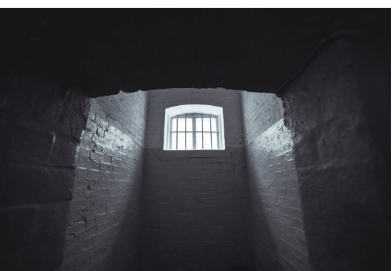
So, I just ask you to take a deep breath, look around, and listen. Even if you don’t hear people using the words “prison”, “jail”, or “inmate”, how do people feel free or not free? Do these parallels of prison and nursing home life apply? Why?
Maybe think about the ways in which we inadvertently, and sometimes with good intention, create a prison culture instead of a thriving community. We can start there.
This is for all of us. Whether you work in long-term care, have a family member living in long-term care, or might someday live in long-term care.

Here are some questions we can all consider.
What language are we using or hearing to describe living in a nursing home or assisted living? Institution, facility, unit, ward?
How might we be encouraging the idea that “putting” a person in a nursing home or assisted living community will result in that person “having to” do things that we want them to do, or not doing things we don’t want them to do? In other words, mom is making some decisions at home that we do not agree with, but when she moves into this assisted living she will be better “managed”. We will create a care plan FOR her, and she will need to follow it.
How might we be setting expectations that a person “needs” to give up their rights or autonomy when they live in a care community? How might we be perpetuating the idea that this is just the way it is in nursing homes or assisted living? How might we be sending the message that people who live in care communities will need to go along with the routines of a nursing home or assisted living?
How do we inadvertently create correctional officers out of professional care partners? What messages do we send to them about how they need to keep their “charges” in line, under control, on a schedule?
How do we have conversations with the people living in care communities about how they might feel imprisoned? Even in thriving, person-centered care communities, the people who live there might be struggling with adapting to living there, and feelings of loss and dependence.
And here is the big question. What does it look like to build a thriving community? For real. How do we create real communities, where people can live their lives with meaning, purpose, identity, connection, autonomy, security, joy (thank you again, Eden Alternative for holding up these domains of well-being)?
In the modified words of Pioneer Network,
“Community is the antidote to institutionalization.”
Community is the antidote to prison.


 The second time was several weeks later. I was on a run. My running path goes past this house that has a German Shepherd in its backyard. The fence follows the path, so as I run along it, the German Shepherd likes to run with me. Actually, he races back and forth along the edges of the fence and barks and growls at me in a threatening way. Every time. This makes me a bit nervous.
 There have been countless examples of Blue the Butterfly, moments in which I’ve been thinking about Blue, or talking about Blue, or just needed Blue, and the Monarch Butterfly has visited.
 I write this knowing that some of you will think I’m a weirdo. That is okay. Of course I am! I am not afraid of being weird.
 Note: I was supposed to be working on the Being Heard series on ageism that I am writing. Alas, I had to pay attention to a butterfly/dog. Pardon the delay and stay tuned for a series of articles on the opposite of ageism.
 Don’t get me wrong. The academic study has been vital to my development. What it particularly gave me was a lens through which to be continually curious about aging, and to always question what we think we know. This is in the spirit of “critical gerontology”, which is really a thing.
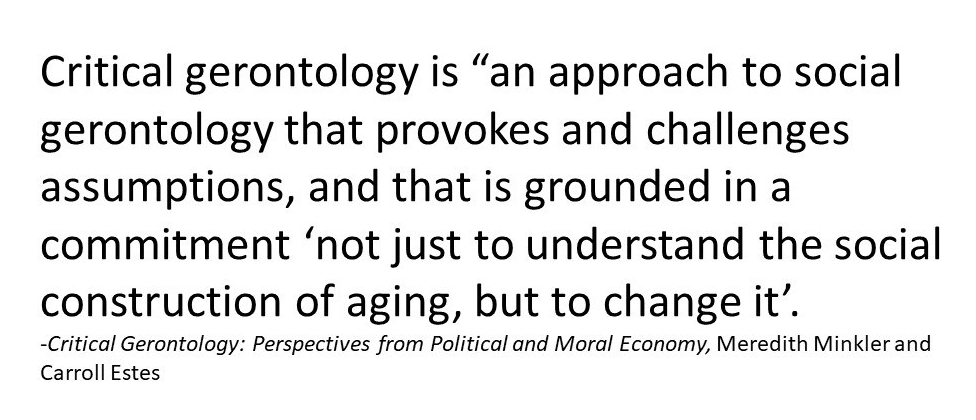 Critical gerontology helped my paradigm shift grow. It helped me see that perhaps there were some cracks in the field of gerontology. And that even within a field that is so well-intentioned, and so new, there is a need for gerontologists to continually be open to newer possibilities, and to create a culture of learning.
 For years I sat and listened to individuals living with dementia as they shared their world with me. And my world changed.

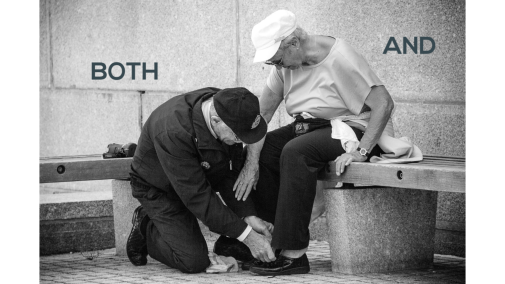





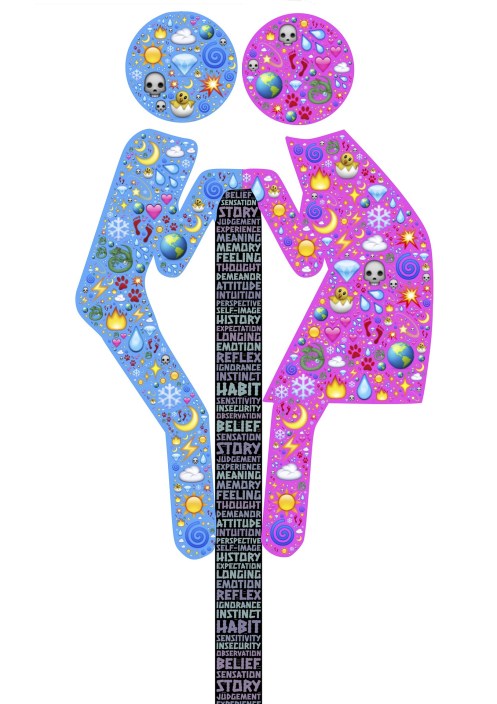
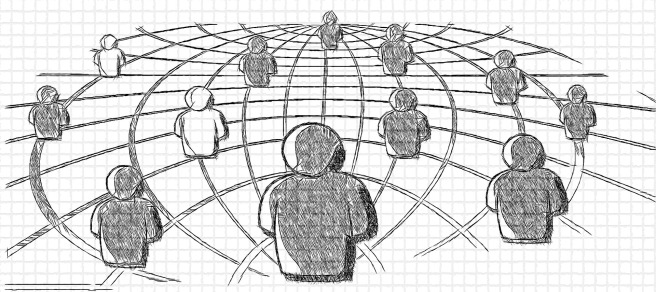
 One of the challenges of loneliness is determining whether a person is actually lonely. We might make assumptions about how we think a person is feeling, but we might not actually know. If a person is feeling lonely, it is also important to not make assumptions about what would make a person feel less lonely. It might not be more people in their lives. It might be deeper connections. Or, it might not be deep connections at all. We need to find the right language to explore this with each other. One of the pathways we might use to do this is through talking together about social connections.
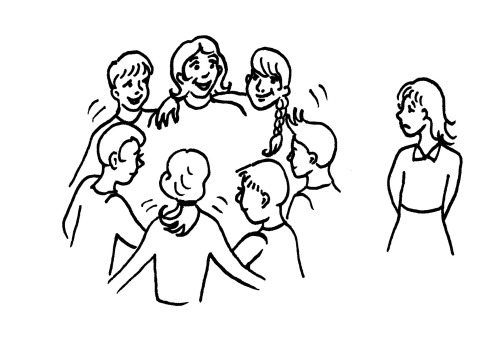 We need to be mindful of our well-intentioned identification of “solutions” to older people’s loneliness that is based on what we think they need.

 And then it always comes back to person-centeredness. If we are to address loneliness, we need to be person-centered about it. To try to see things from a person’s perspective, and understand if she or he is lonely, what social connection means to him or her, what is important to him or her. See the person. Perhaps consider that we are facilitating opportunities for purpose and connection, rather than driving solutions for older people.

