Disclaimer: I am in NO WAY suggesting that elders are similar to children, aside from our fundamental humanness. But we can learn a lot by observing how we think about and treat humans at different ages. Carry on.
Imagine this scenario. I am with two people I know. They walk around me frantically, coming up to me closely, grabbing my hands and pulling me with them. They periodically scream or collapse into a fit of giggles. When I do not “do something the right way”, they get “agitated”, sometimes cry, or walk off and ignore me for an hour. Interesting “behaviors”, for sure.
Who are these people, you might ask? They are 5-year olds.
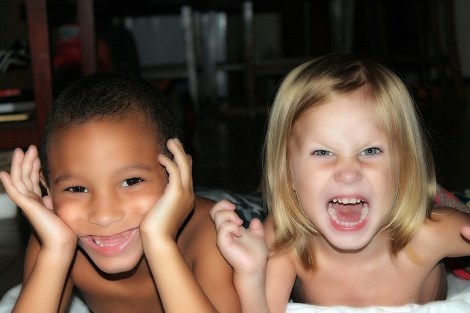
However, they could be of any age, really. Imagine how we might think about this scenario differently if I was talking about elders, or people with dementia.
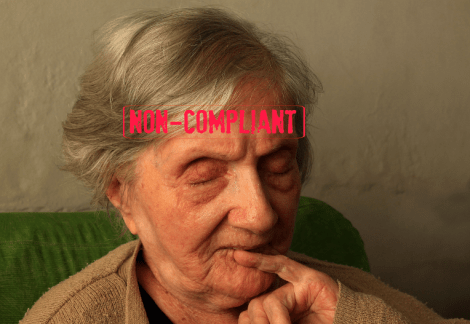
When we talk about “behaviors” of elders or people with dementia, we seem to have this impression that “we” (as we distinguish ourselves from “them”) need to manage THEIR “behavior”. Their behaviors are labeled, sometimes as inappropriate or problematic, but are generally seen as not acceptable. I see this with people with dementia, whose behaviors are described as “agitated, non-compliant, aggressive, apathetic, ornery ….” I also have seen this when adult children talk about their older parents. They describe them as being “stubborn, unreasonable, throwing tantrums”. They even might say, “My mom is acting like a 5 year old!” In other words, their behavior is unacceptable and must be stopped!
I find it interesting that, with children, we are often much more open-minded and forgiving of their behaviors. When a child is upset because he or she is not getting his or her way, or is insisting on something, we might explain this by saying that the child is exercising his or her choices. In fact, we might even encourage this behavior, because we want to instill confidence in the child in making decisions and having an opinion. Yet, when we are talking about elders, and an elder is angry because his or her choice is not being honored (justifiably), we say that the person is stubborn, or even non-compliant (meaning not complying with OUR choices). And then we seek to change the behavior of the elder, or make choices for them.
It is particularly interesting because one might argue that, with children, there are at times good reason to modify behavior. For example, in the spirit of raising good little humans, one might explain to a little human that grabbing someone’s arm and dragging them is not an effective way to get someone’s attention. But for elders, who are already raised humans, what is our expectation in telling them how they “should” behave? Why are we not trying to understand the behaviors of elders and people with dementia? Why do we even call them behaviors? Can we just say this is the way people act? When an elder is upset because we do not “allow” them to make choices, why do we not see this as a normal human reaction?
I was thinking about all this because I was reflecting on a comment that I often hear about me being a gerontologist that goes something like this:
“That is great that you are so ‘good’ with old people. I couldn’t do it. I love children, so I guess everyone has their thing?”
When people say this to me, if I am being particularly ornery, I will usually say something like,
“Wow, I can’t believe you work with children. I could never do that. Good for you, not for me!”
I say this tongue in cheek, but maybe there is some truth to the idea that we have “affinity” for different age groups. When I am with an elder, I really accept them for who they are at that moment. An elder could even be rude, or mean, and I find myself truly trying to understand who they are, and why they might be acting that way. With children, I am not so empathic. I can’t seem to accept him or her for who they are in that moment, because I am so caught up in how they are acting. What I find myself thinking about is how I need to prepare this little human for life. She needs to know that she cannot yell at people like that. He needs to learn that he cannot always win. So, maybe I am guilty of trying to manage children’s behaviors, just like I see others trying to manage the “behaviors” of elders!
However, I would like us to consider that this approach to elders, of trying to change their “behaviors”, is wrong. Here are some reasons why.
1. Elders are grown adults. They do not need to be molded into “good” humans. Unless they ask to be.
2. Each one of us has the capacity for good and not so good. This IS being human. We do not have the right to define how elders “should” act.
3. If anything, as we get older, we even more so reserve the right to choose our own behavior. Even if it is not behavior that is “nice”. Even if people don’t like it.
4. Elders often tell me that they feel most themselves as they have grown older. So, perhaps we have to really trust that the way elders communicate with their actions is deeply reflective of their needs and what is important to them.
Rather than trying to change the way elders act, let’s try meeting them in their present, while considering all of their life experience and what matters to them now and moving forward.






 I will insert my caveat here. I know that there are nursing homes that are working so hard to do better. They are changing the way they do things, for the people who live and work in these homes. I work with these people. It is incredibly hard work. And it is possible. Thank you to these brave people. But as a “field”, there is still not enough change.





 Being Heard