Let’s say that I live in what I consider a close knit community. I know most of my neighbors. We have porches, and we sit on them often, and visit with each other. We don’t have garages, so we see each other every time we go into or out of our car. We make an active effort to meet our neighbors. When a person moves in, you go up to their door and say hello.

But there are these other neighbors that I would like to get to know. And I have not been able to connect with them. They live in a building down the street. They don’t have porches, or cars. In fact, they don’t really go outside much. They have a courtyard but I rarely see people sitting out there. It is also protected by a very high fence. If I go inside the building, I am stopped by a person at the front desk who asks me if she can help me.
“I would like to visit with some of the people who live here,” I say. “They are my neighbors.”
“Well, you can’t just go up to their doors,” she says. “We don’t even know you!”
“Well, they don’t know me either. But I would like to meet them. I don’t want to intrude on them. But I don’t know where else I can meet with them. Where might I see them in the neighborhood?”
“Oh, they don’t go outside much,” she says with a strange look.
“That’s too bad. Could I invite them to a meeting? Maybe a neighborhood meeting?”
“Oh, I don’t know. They couldn’t go alone, and I don’t think we can find people to go with them.”
“Well, can you let some of them know that I would like to meet them?”
“Well, okay.” she says hesitantly. “Do you mean like be a volunteer?”
“Well, maybe. Does that mean I could visit them?”
“I guess so… if you pass a background check.”
“Hey, I have an idea. Do you think the people who manage this place would be open to hosting a get-together so that I could come and bring some of my friends to meet the people who live here?”
“Oh, I don’t know. I would have to check to make sure that would be okay. I am not sure we are allowed to have people here who are not family or volunteers.”
“What if I sent an invite myself to the people who live here to ask if I can come and visit?”
“That doesn’t really happen. I mean, they don’t even know you. How do we know you are not an ax murderer?” She looks at me as if I am an axe murderer.
This fun little fake-not fake discourse is my way of bringing up a really strange phenomenon about people living in nursing homes (as well as assisted living and other care residences), and the people who live outside the walls of these residences – their neighbors.
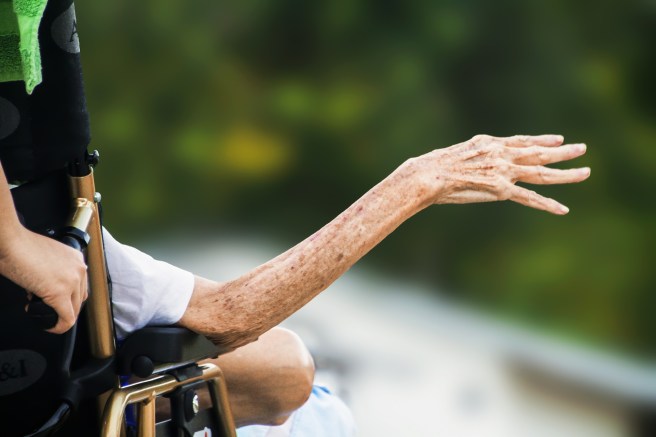
In normal life, I can go to my neighbor’s house or apartment and meet them. I see them outside and we become friends. But if your neighbor is in a nursing home, this is not the way this works. Because people in nursing homes are seldom outside, and even more seldom, out and about in the greater community, it is very difficult to make direct connections with them. It is like they are not there. Yet, they are.
This is a very abnormal situation. We are neighbors. Why are they different than any other neighbor? Why would I not want to know them?
If I want to just meet a neighbor, and that neighbor happens to live in a nursing home, it is extremely difficult for me to develop a relationship with that person without first developing a relationship with the nursing home. There is a gate between people in nursing homes and the greater community. And the people who work in nursing homes, inadvertently, or maybe advertently, serve as gatekeepers.

What this means is that the gatekeepers control the access of people who live in nursing homes to the outside community, and vice versa. There is even a term for this – “institutional permeability”. Yuck. Sounds terrible, like we should be talking about something in a petri dish. But it refers to how well an “institution”, such as a nursing home, is integrated with the larger community. Institutions have gatekeepers. And we don’t want nursing homes to be institutions.
Certainly, there are good reasons why we might “monitor” who has interactions with “vulnerable” people living in nursing homes. Maybe bad people would try to take advantage of them. It is also their home, so we don’t want unknown people walking in, milling up and down the hallways without being invited.
Yet. The abnormality of this just strikes me.
It’s not that it is not possible for a person to visit someone in a nursing home, or that someone in a nursing home cannot participate in their surrounding neighborhood. It is that it does not generally happen. Especially in any natural kind of way. Everyone has to go through the gatekeepers.
I’m not really talking about the schoolchildren who come in to nursing homes to sing, or the outings that people living in nursing homes make, maybe in groups, for fun things, or to go to doctor’s appointments. I’m talking about the simple, rich interaction between neighbors that is prohibited by this reality that we cannot easily access each other.
Certainly, I understand that there currently are not hordes of people trying to go into nursing homes and meet the people who live there. But maybe this is because they don’t see them as their neighbors.
So what can we do about this? First, we have to believe this is important (I do). Then, maybe we, as neighbors, can find ways to meet our neighbors in nursing homes, to include them in our neighborhoods. Maybe we, as gatekeepers, can examine this role, and see what we can do differently. Maybe we can be gate openers? Or, can we just get rid of the gate?

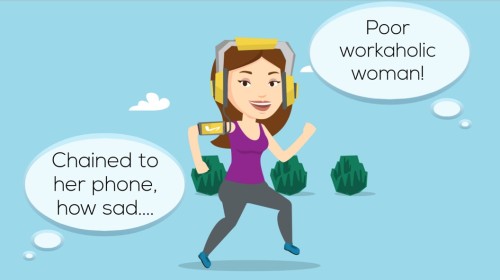


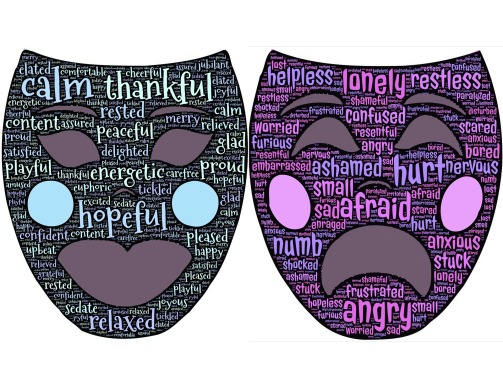
 “We” in Gerontology are so fond of placing people and experiences in categories. An older person is “frail” OR “well”. They are aging successfully (or not, I guess, although I am not sure what that means?). Think of the stories we hear about growing older. There is the story of pure loss. Or all-encompassing illness. Or, there is the story of pure contentment. Overwhelming wisdom. “The best time of your life – the golden years.” We describe elders as having positive outlooks, or they are just pessimistic.