Dear Dementia Simulation Program aka “DemSim”,
I would like to be your friend. I really would. But I have worries. You may not know me very well, so you wouldn’t know that I have a lot of worries, being a worrisome person.
I know you don’t intend to be a cause for my worry, but you are.
This is a hard letter for me to write. I am not sure it will be received well. You might not even want to be my friend after reading it. But I need to write it.
You see, I am worried about how you are explaining the experience of dementia to people.
Maybe it is none of my business. But it also is. I have been advocating for the rights and support of people living with dementia for 30 years. This has meant that I have had the incredible privilege of learning from people living with dementia, and their families and friends, by hearing their stories and experiences, and by witnessing their hope and resilience, as well as their grief.
Through this I have also witnessed the paradigm of dementia that we have, that is in the air we all breathe.

This paradigm stigmatizes people living with dementia. It focuses primarily on the deficits of people living with dementia. It puts people living with dementia into boxes, i.e. stages, that discourages us from seeing people as individuals. This dementia paradigm abnormalizes people living with dementia, and tells us that everything a person living with dementia does, thinks, or even feels is pathology. It dismisses the idea that people living with dementia, like all of us, have things we do well, and things we don’t do well.
The stigma of dementia tells a story about dementia that results in us seeing people living with dementia in a certain way – as incapable, different, problematic, “other”. This has the potential for us to dehumanize persons living with dementia.
Being with people living with dementia – seeing them, hearing them, learning from them – has showed me how untrue this paradigm is.
People living with dementia are everything. They are full human beings. They are capable, smart, tenacious. They are all the things that every human being is. They just happen to live with brain changes.
So, I worry that you, DemSim, are not telling this story.
I worry about the story you are telling.
DemSim, when people spend time with you, you give them things to do that they can’t do. In fact, you deliberately make it hard for them to do these things. You make them wear gloves so they can’t pick up things. You make them wear glasses so they can’t see well. You make it dark. You make it loud. You give them tasks to do, like putting clothes away, or finding things, or sorting things, and they are not allowed to talk to you or ask questions.
This is all you want to do, by the way, so this is sort of a bummer.
So these people naturally get frustrated and angry and scared and anxious.
And then you say that this is because of their dementia!
But it seems to be more about these limitations you are putting on people.
Okay, so let’s say this is dementia.
But you seem to only focus on what a person with dementia CAN’T do. What about what they CAN do?
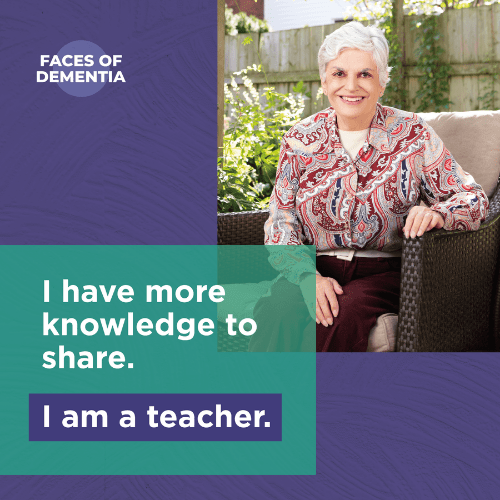
I worry that after people spend time with you, they might not be looking for what persons living with dementia CAN do. They might not try to support a person with dementia to do what they can, or in a different way, because they might think “dementia just makes people not be able to do things”.
I don’t think that is what you want people to think about you?
I also worry that people who spend time with you might think that the main reason why a person with dementia is not doing something is because they CAN’T, when sometimes the reason is that they don’t want to. Maybe they don’t want to fold clothes, or sort buttons.
I worry that one of your messages is that we should “do” more to people living with dementia, rather than with people living with dementia. I hear a message that, because people living with dementia have difficulty doing things, we need to do more for them, or give them more instructions to do things. And this could be true for some situations. But what about asking a person living with dementia what they want to do? Is this task important to them? If it is something they need to do, how do we partner with people living with dementia rather than do for and to them?
DemSim, by mostly focusing on what people living with dementia can’t do, and trying to equate dementia with frustration, anger, anxiety, loss, and deficit, I worry that you focus on the tragedy narrative of dementia. This is a part of the stigma of dementia, and tells us that the experience of dementia is all about decline and loss.
Living with dementia can be very hard. But we can neither presume this is the experience for every person, nor only focus on what people have difficulty with. If people around me defined me by what I had difficulty doing, I don’t think that would be the full picture of me. I wouldn’t want people to only see that about me.
This is not the whole story of dementia, DemSim. It is again a bummer that this is all you want to talk about.
I worry that this tragedy narrative of dementia evokes sympathy more than empathy. Sympathy is when we feel bad for a person – we pity them. With empathy we are trying to understand someone’s experience from their perspective. In the words of Brene’ Brown, “empathy drives connection while sympathy drives disconnection”. This is because, with sympathy, we create distance by holding someone at an arm’s length from us – “that poor person”. With empathy, we sit with the person – “I am with you”. Empathy motivates us to move closer to people and try to understand their lived experience.
I worry that you might be propelling disconnection, and I don’t think you are meaning to do that.
DemSim, you describe yourself as a firsthand experience of living with dementia, yet you do not include the voices of people living with dementia. I worry that people spending time with you think that this is definitively what it is like to live with dementia. Yet, without hearing from people living with dementia themselves, we cannot know what it is like to live with dementia.
You, DemSim, cannot know what it is like to live with dementia. How would you?
Each person experiences living with dementia differently, based on many factors: their own personal factors – physical health, personality, life history, social supports, socioeconomics, etc.; the type of dementia they have; the areas of cognition that are affected for them and to what extent; where they are in their dementia, etc. So there is no one way to experience dementia.
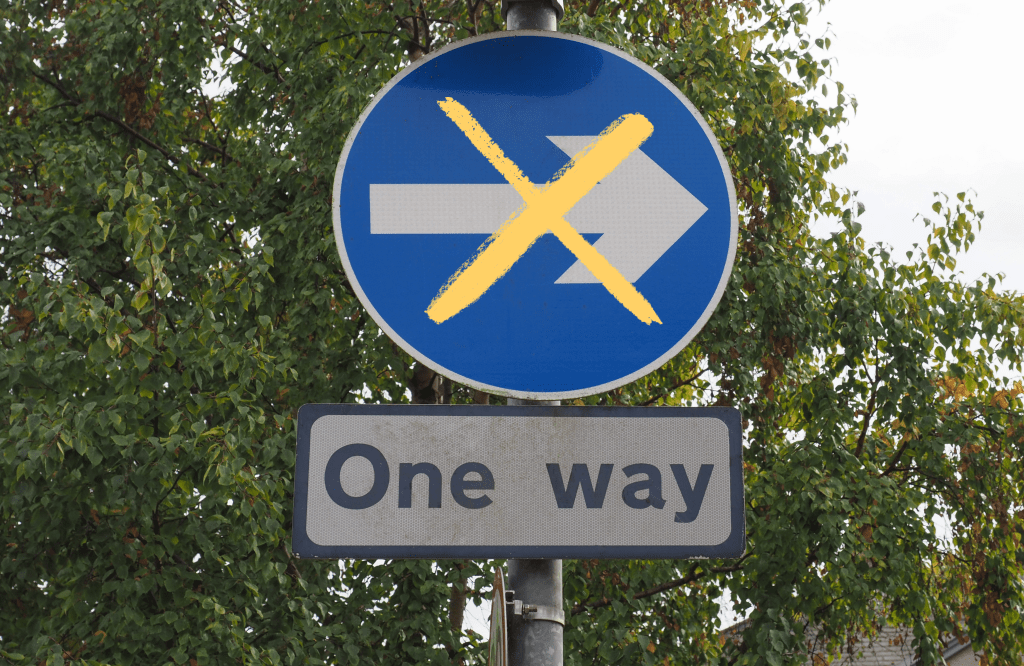
It would be difficult for any of us to say how a person experiences dementia. People living with dementia tell me it is even difficult for them to say how they experience dementia, because it changes day to day for them.
DemSim, I worry that you are perpetuating a widespread misunderstanding of dementia. While some people who have dementia may experience some of the things you simulate, like vision challenges, discomfort in their feet, and challenges with maneuvering things with their hands, these things are not necessarily a part of dementia itself.
I think you know that dementia is separate from these other medical conditions, and that not all people with dementia have them, but the people who spend time with you might not. There is a lot of misinformation about dementia. And the seed has already been planted when people commonly confuse aging and dementia
I worry that your story of dementia doesn’t include the actual cognitive changes of dementia, which is really the root of what dementia is. Dementia is so often described as being about personality changes and behaviors, particularly in a negative way. But people hear less about the actual parts of cognition that are affected, more than “memory loss”, and how that impacts a person living with dementia.
So, after spending time with you, people might not understand what the actual cognitive symptoms of dementia are.
DemSim, I don’t mean to offend you, but when a person spends time with you, and they mainly feel frustrated and angry, they may come away thinking this is all that dementia is, and this is who persons with dementia are.

They might think this is how dementia “makes you act”. And if a person with dementia expresses frustration and anger, it is just their dementia doing that, not all the many normal human reasons why a person feels those things.
We might not try to understand the “why” behind their expressions. We might not try to see their perspective, and how they are seeing the world differently. We might think that the symptom we are addressing is anger, not pain or challenges with information processing or unhelpful communication or being asked to do something a person doesn’t do. We might put more attention on the “problem behavior” than the overall well-being of the person. So we focus more on making their anger go away through medication, and less on finding out what a person needs.
I need to share with you, DemSim, that I was frustrated when spending time with you. But I didn’t attribute this feeling to what it might be like to have dementia. It is what it feels like to be human. Spending time with you seems to tell us that when humans are put in situations in which they are subjected to sensory overload, cognitive overload, and anxiety-producing experiences, they will likely all experience the same things – frustration, anger, confusion, impatience.
So it is not about dementia, but being human.
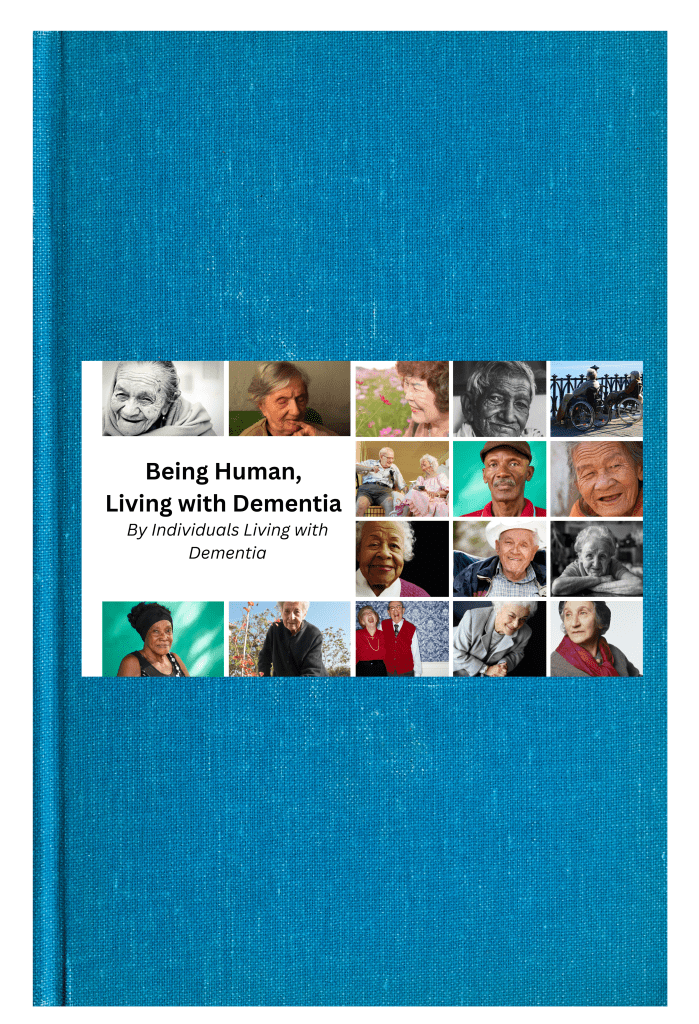
I think this is the story we need to tell.
And the WHOLE story, DemSim.
Maybe you are wondering, DemSim, why I am writing this. This was not something I needed to do. It is unsolicited. So why?
I’m writing this because I feel like I have to share what’s in my heart. I have to share these concerns that I have about you. Not just for me, but for people living with dementia. I am not sharing this in a paternalistic way of protecting people living with dementia. I’m sharing this because the things that I have learned from people living with dementia do not seem to be aligning with some of the values I see in you, DemSim.
DemSim, you are very well liked and maybe people have been afraid to bring this up. But I want to believe that this would be concerning to you if you thought that you were unintentionally contributing to stigmatized views of dementia.
I do appreciate the attention that you have given to the experience of people living with dementia, which had not gotten attention for a very long time.
You do make the good point that the environment, even society, might set people living with dementia up to fail, just like your simulation does. The systems we currently have do not adequately support people with dementia to really live their best life.
Maybe people spending time with you can reflect on that, how they can create different systems that better support people living with dementia, to enable them rather than disable them. Maybe they can think about how we, as individuals, can impact the experience of people living with dementia, by seeing them as whole, capable, and focusing on what they can do rather than what they can’t.
I ask that you might consider promoting another narrative of dementia that focus on the personhood of people. You have such an opportunity to influence the story of dementia!
I ask that you consider how you could incorporate the voices of people living with dementia, and not just people’s deficits or challenges but their possibilities, their capabilities, their assets. In doing this, you would open a gateway for society to more deeply engage people living with dementia, not just seeing them for what’s “wrong” with them, but seeing them for what’s right with them.
With Love,
Sonya the Revisionary Gerontologist

 Being Heard
I applaud your clarity, compassion, and courage Sonya. You are saying things that need to be said and that I hope will be heard.
LikeLiked by 2 people
This is a wonderful piece, Sonya. Your respectful approach should not turn any well-meaning person. I so appreciate your focus on personhood — for all persons, under all circumstances, reardless of the diagnosis. It calls forth such implications for our response. Your call for a shift in mindset around dementia and persons living with dementia is desperately needed today. Dont stop writing!!
LikeLiked by 2 people
Excellent feedback. Watching some of the videos of people in similar training where the VR headsets, rubber gloves, ear protectors, etc., I find very troubling. I’ve had relatives and friends with dementia and their experience was far from this. To “stereotype” the experience truncates the reality of what living with dementia may be like.
LikeLiked by 1 person
Thank you Sonja! As I think about the years I spent in the small and well staffed “memory unit” where my parents lived, I remember individuals – Frank, a jazz musician who was a wonderful dancer, the way my dad embraced his caregivers each morning and his friendships with residents and staff. The civil servant who loved to flirt and make everyone laugh. My mom’s kindness and affection and how much she loved the caregiver who cradled her as eating became more difficult. How the last words in my mom’s vocabulary were “I love…” People with dementia are capable of the full range of human emotions despite the challenges created by their illness and (too often) by the environments in which they are placed.
LikeLike
As always, you are advocating for people living their full lives with all the capabilities and strengths every person has. You are amazing, Sonya!
LikeLike